Tornado Guide 101: Engineering Your Family Safe Room
I remember May 3rd, 1999, like it was yesterday. The sky didn’t just turn green; it turned a shade of black-violet that I haven’t seen since. Back then, most of us just huddled in a hallway with a mattress over our heads, praying the anchor bolts held. We’ve come a long way since those days. In Oklahoma, we don’t just “hope for the best” anymore. We build for it.
If you’re reading this, you’ve likely decided that an interior closet or a bathtub just isn’t enough. You’re right. When an EF5 is on the ground, you need more than luck; you need physics on your side. Building or installing a safe room is a sophisticated engineering task. It’s not a weekend DIY project. It’s a specialized fortress designed to keep your family breathing while the world outside is being rearranged.
Let’s walk through the essentials of what makes a safe room truly “safe” and how to ensure yours is built to withstand the most violent winds on the planet.
The Core Philosophy of the Safe Room
What exactly is a safe room? It isn’t just a “strong room.” According to FEMA, a safe room is a hardened structure specifically designed to provide near-absolute protection in extreme weather events.
The goal is simple: the rest of the house can disappear, but the safe room must remain standing, anchored, and unpierced. To achieve this, we focus on three specific engineering challenges:
-
Structural Load: Withstanding the literal weight of wind and pressure.
-
Impact Resistance: Stopping “missiles”—flying debris like 2x4s or bricks.
-
Anchoring: Ensuring the room doesn’t become a projectile itself.
Selection: Above-Ground vs. Underground
One of the first questions I get asked at the shop is, “Do I really have to go underground to be safe?”
The answer is no. Both above-ground safe rooms and underground bunkers offer 100% survivability when built to spec. The choice usually comes down to your home’s layout and your family’s physical needs.
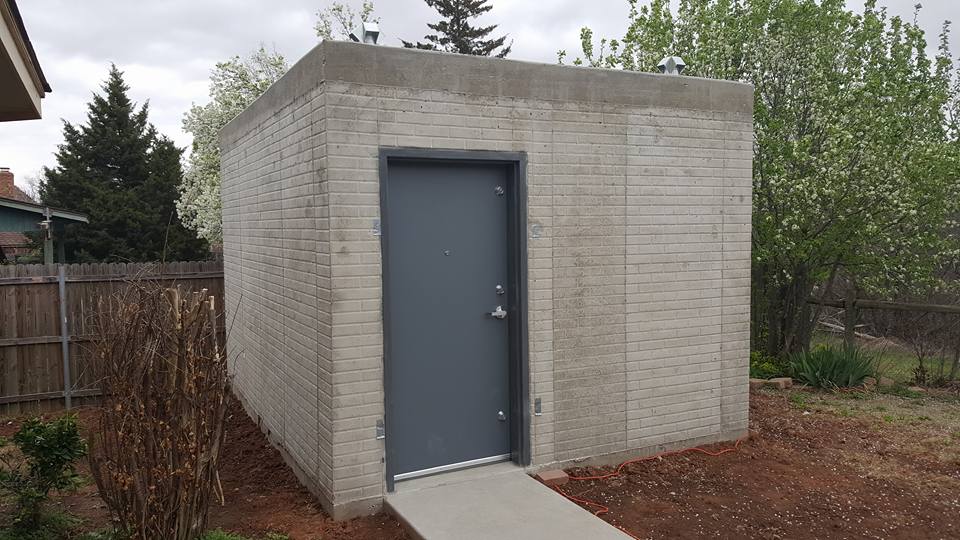
Above-Ground Steel Safe Rooms
These are usually installed in a garage or on a reinforced interior slab.
-
Accessibility: This is the huge winner here. No stairs. No ladders. If you have a family member in a wheelchair or an elderly parent, they can roll or walk straight in.
-
Psychology: For those who struggle with claustrophobia, being at ground level with multiple ventilation points feels much less restrictive.
-
Panic Room Utility: Because they are easily accessible, they can double as a high-security room for home defense.
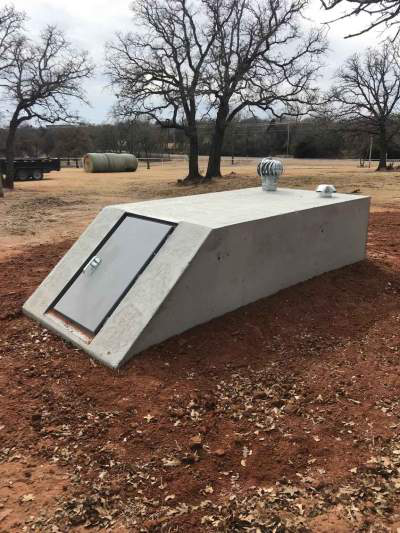
Underground Bunkers and Garage Units
These utilize the earth as a natural shield.
-
Ground Buffering: The wind cannot get under the unit.
-
Space Saving: Since they are buried, they don’t take up any usable square footage in your house.
The Engineering Standards: FEMA 361 and ICC 500
When you are looking at safe rooms, you will hear people throw around “FEMA compliant.” What does that actually mean? It means the room has been tested to meet the criteria in FEMA P-361 and ICC 500.
The Missile Test
Engineers at Texas Tech University use a pneumatic cannon to fire a 15-pound wooden 2×4 at the walls and door of a safe room at 100 mph. For a room to be EF5 rated, that 2×4 cannot penetrate the steel or concrete. It’s a violent test, but it mimics exactly what happens when a house is shredded.
Wind Pressure Requirements
An EF5 tornado produces winds over 200 mph. This creates immense “uplift” and “lateral” pressure. The safe room must be able to withstand these forces without buckling. This is why we use heavy-gauge steel (usually 1/4 inch or thicker) and reinforced framing.
Location: Where Should the Fortress Sit?
You might think the center of the house is best. While that’s true for a regular room, a safe room is different.
Slab Requirements
The most critical factor is the foundation. A safe room is only as strong as what it is bolted to.
-
Concrete Thickness: Most safe rooms require a reinforced concrete slab that is at least 4 to 6 inches thick.
-
Anchoring Points: We use industrial-grade wedge anchors. These are drilled deep into the slab to ensure the room stays put even if the garage around it is blown away.
Accessibility vs. Obstruction
You want the room close enough to reach in seconds. However, you must consider what might block the door.
-
Debris Path: If your garage is full of heavy equipment or a secondary vehicle, could those slide and block the safe room door?
-
Inward vs. Outward Swinging Doors: Most modern safe rooms use an inward-swinging door or a sliding door. Why? Because if debris piles up against the outside of the room, you can still open the door to get out.
The Anatomy of the Door: The Weakest Link
In almost every failed shelter, the door was the culprit. It is the largest moving part and the most likely to fail under pressure.
-
Three-Point Locking Systems: A standard deadbolt won’t cut it. A tornado door should have at least three heavy-duty locking pins that secure the door to the frame at the top, bottom, and side.
-
Heavy-Duty Hinges: We use massive, reinforced hinges that are welded, not just screwed, to the frame.
-
Steel Thickness: The door should be just as thick, if not thicker, than the walls.
Ventilation: Staying Cool Under Pressure
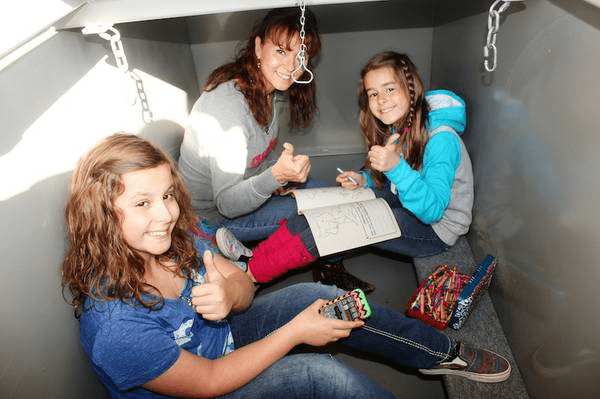
If you’ve ever been in a safe room with five people and two dogs during an Oklahoma summer, you know it gets hot fast.
-
Strategic Venting: FEMA guidelines require a specific amount of ventilation based on the number of occupants.
-
Debris Shields: The vents must be designed so that while air can get in, flying debris cannot. This is usually achieved through a “baffled” design—a series of angled steel plates that block a straight line of sight into the room.
The Interior: More Than Just Four Walls
Once the structure is sound, you need to think about the “survivability” of the interior.
Communication
Standard cell service often fails during a tornado.
-
NOAA Weather Radio: This is your lifeline. It tells you when the threat has passed.
-
Whistle: If you are trapped by debris, a whistle is much louder and more sustainable than shouting for help.
Emergency Supplies (The “Go-Bag”)
Keep a kit inside the room at all times.
-
Footwear: I cannot stress this enough. Keep a pair of old sneakers or boots for everyone in the family inside the safe room. If you have to walk out over a field of broken glass and nails, you’ll be glad you have them.
-
First Aid: Focus on trauma—gauze, tourniquets, and antiseptic.
-
Helmets: Many Oklahomans are now keeping bicycle or batting helmets in their safe rooms to prevent head injuries from flying debris.
Why Customization Matters
Every home in Oklahoma is different. Some have post-tension slabs; some have older, thinner concrete.
We don’t believe in “one size fits all.” At Oklahoma Shelters, we look at your home’s specific architecture. We ensure that the safe room we install is perfectly mated to your foundation. Whether it’s a 4×6 for a small family or a community-sized room for a business, the engineering must be precise.
Common Mistakes to Avoid
In my years of helping families, I’ve seen some dangerous shortcuts. Avoid these at all costs:
-
Building with Standard Lumber: A “reinforced” wood closet is better than nothing, but it is not a safe room. Wood splinters under EF5 loads.
-
Ignoring the Slab: Bolting a safe room to a thin, cracked driveway slab is a recipe for disaster.
-
Using Standard Doors: Never use a “security door” from a big-box store. They are not designed for wind loads.
-
DIY Anchoring: If you don’t use the correct torque and depth on your anchors, the room can lift.
The Peace of Mind Factor
We spend a lot of time talking about the technical specs—the steel gauge, the anchor depth, the PSI of the concrete. But the real value of a safe room isn’t found in a manual.
It’s found in the moment the siren goes off.
Instead of panic, you have a process. You grab the kids, the dog, and the weather radio. You walk into your safe room and shut the door. While the world outside feels like it’s ending, inside, you are in a sanctuary. That quiet confidence is what we build.
Why Choose Oklahoma Shelters?
We are Oklahomans. We have lived through May 1999, May 2013, and countless others. We don’t just sell safe rooms; we sell the same protection we use for our own families.
-
FEMA Compliant: Every unit we sell meets the highest federal safety standards.
-
Fast Installation: We can typically have your safe room installed in 7-10 days.
-
Local Expertise: We know Oklahoma soil and concrete better than anyone.
Summary of the Safe Room Guide
-
Near-Absolute Protection: Safe rooms are engineered to survive an EF5 even if the house is destroyed.
-
Accessibility: Above-ground units are the best choice for those with mobility issues.
-
FEMA Standards: Look for units that pass the 100 mph 2×4 missile test (FEMA 361).
-
Anchoring: The strength of the room is dependent on the quality and depth of its slab anchors.
-
Door Integrity: Ensure your room has a three-point locking system and reinforced hinges.
-
Supplies: Always keep helmets, shoes, and a weather radio inside the room.
Take the Next Step for Your Family with a Safe Room From Oklahoma Shelters
Don’t wait for the clouds to turn that haunting shade of green. Secure your legacy and your loved ones with a fortress built to last.
Ready for a quote on a custom safe room? Give us a call at 405-367-7901 or reach out to us via email. We are here to help you navigate the options and find the perfect fit for your home.
Email: sales@oklahomashelters.net