Tornado Signs to Watch Out For: A Guide to Staying Safe in Oklahoma
Living in Oklahoma means being part of “Tornado Alley.” In this region, severe weather is a part of the landscape. While technology has improved, your own senses are still your first line of defense. Knowing the visual and auditory signs of a tornado can save your life.
The best way to protect your family from a tornado is a shelter room. However, knowing when to enter that shelter requires a keen eye and ear. This article breaks down the specific signs you must watch for when a storm begins to brew.

1. Cloud Rotation: The Sky’s First Warning
Even before a tornado forms, storm clouds will appear in the sky and start to move. Rotation is the primary indicator of a developing tornado. Most tornadoes form from “supercell” thunderstorms, which are characterized by a rotating updraft called a mesocyclone.
How to Spot Rotation
Keep an eye on these clouds to check for any rotation or circular movement. You aren’t just looking for clouds moving across the sky. Instead, look for vertical spinning, where clouds seem to be rolling or spinning like a top. You should also watch for a “wall cloud,” which is a distinct lowering of the storm’s base that often begins to rotate before a funnel appears.
If different layers of clouds are moving in opposite directions, it indicates high-altitude wind shear, which is a major factor in storm development. Seeing these signs may indicate an incoming tornado. Do not wait for a visible funnel to appear; rotation in the sky is your cue to begin your emergency protocol immediately.
2. Debris and Dust: The Invisible Funnel
Sometimes a tornado is not visible as a clear funnel cloud. High levels of moisture or rain can wrap around the tornado, hiding the classic “cone” shape. In these cases, you must look at the ground.
Identifying the Debris Cloud
Before a tornado forms on the ground, it may be present as gusts above the cloud. Watch out for dust and debris being collected at a single point underneath storm clouds, as this indicates rotational wind movement at the surface.
This debris cloud is often the only visual proof that a tornado has reached the ground. If you see objects being lofted into the air or a localized cloud of dust scudding along the floor of the storm, a tornado is already active. Flying debris is the leading cause of injury during these events. If you see it, you are already in the danger zone.
3. The Sound: The Ominous Rumble
Not all signs of a tornado are visual. In many cases, you will hear a tornado before you see it. Tornadoes are extremely loud and typically produce a sound that resembles a large, continuous rumble.
What Does a Tornado Sound Like?
Survivors often compare the sound of a tornado to a freight train, characterized by a low-frequency roar that grows louder over time. Others describe it as a jet engine with a high-pitched, screaming wind sound. Unlike thunder, which cracks and then fades, the sound of a tornado is constant.
Keep your ears open during a storm for any loud engine-like sound getting closer. This may be a tornado moving directly toward you. If the noise is accompanied by the sound of breaking glass or snapping wood, the storm is likely at your doorstep.
4. Nighttime Signs: Ground Lightning and Power Flashes
Tornadoes are especially dangerous at night because darkness hides rotation and debris. However, there are unique visual cues that appear only in the dark, specifically at ground level.
Ground Lightning and Sparks
At night, sparks on the ground may be transformers and power lines being destroyed by high-speed winds. These are often called “power flashes.” Unlike natural lightning that happens in the clouds, power flashes occur at ground level and often produce bright blue or green light.
Keep an eye out for any sparks in the dark during a storm to catch a tornado before it reaches you. These flashes often look like quick, pulsating bursts of turquoise light that stay near the horizon. If you see the sky lighting up with these flashes near the ground, it means the tornado is currently destroying infrastructure and you must head to your safe room immediately.
5. Subtle Meteorological Clues
Beyond the primary visual and auditory indicators, there are other subtle signs to monitor as a storm approaches.
The Calm Before the Storm
Sometimes, right before a tornado hits, the wind will suddenly die down and the air may become strangely still and quiet. This happens because the tornado’s updraft is pulling all the surrounding air into the funnel. If the rain suddenly stops and the wind disappears, do not assume the storm is over. It could be the “calm” that precedes the most violent part of the storm.
Changes in Sky Color
Severe thunderstorms often take on a greenish or yellow tint. This “green sky” is caused by sunlight being scattered through large amounts of water and hail in the atmosphere. While a green sky doesn’t always guarantee a tornado, it is a hallmark sign of a supercell capable of producing one.
Why a Dedicated Shelter Room is Your Best Protection
Once you recognize these signs, you have very little time to act. Standard homes—especially those without basements—often cannot withstand the force of an EF4 or EF5 tornado. This is why having a professional storm shelter is vital for long-term safety.
Above-Ground Safe Rooms
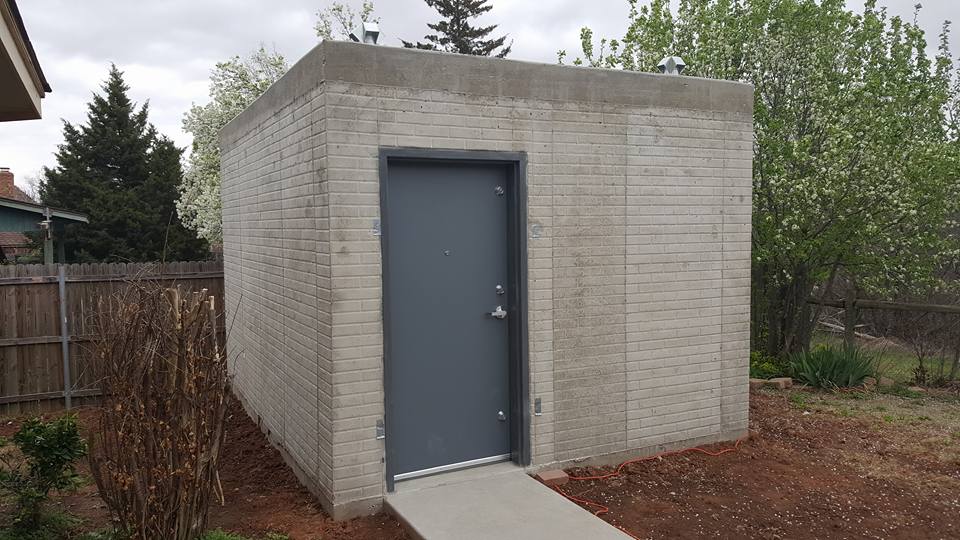
Above-ground safe rooms are designed to be accessible and can be installed in garages or closets. This makes them ideal for the elderly or those with limited mobility. When you hear the “freight train” sound, you can step into your safe room in seconds without having to navigate dangerous stairs.
Underground Bunkers
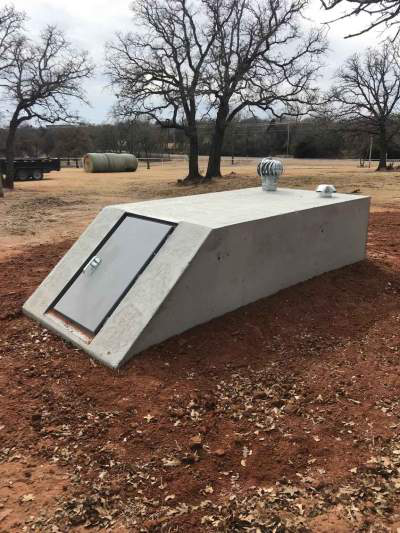
Underground shelters utilize the earth’s natural protection. By getting below ground level, you avoid the most dangerous flying debris and high-speed winds. Oklahoma Shelters provides top-tier safety solutions tailored for our unique climate, ensuring your family stays safe when the rotation starts.
Summary of Tornado Warning Signs
There are several key warning signs that Oklahomans should recognize to ensure their safety. Visual rotation in the clouds, such as circular movement or spinning, is often the first indicator. On the ground, look for debris clouds—swirling dust and objects at the surface—which prove a tornado is active even if a funnel isn’t visible.
Auditory signs are equally important; listen for a loud, continuous roar similar to a jet or a freight train. At night, watch for ground lightning or power flashes, which appear as blue or green pulses on the horizon as power lines are destroyed. By recognizing these signs early, you can take shelter before the storm reaches its peak.
Don’t wait until the clouds start to spin to make a plan. The best protection for your family is a reinforced, certified shelter.