Ultimate Safe Room Guide: Protect Your Family from EF5s
Living in Oklahoma means understanding a specific kind of silence. It is the heavy, stagnant air that precedes a dry line moving through in May. As someone who has watched the sky turn that eerie shade of bruised-plum more times than I care to count, I know the feeling of checking the radar every ten minutes. We all remember the big ones—1999, 2013, and the countless “close calls” in between.
In our neck of the woods, a storm shelter isn’t a luxury. It is a fundamental part of a responsible home. But there is a lot of confusion about what actually constitutes a “safe room.” Is it just a reinforced closet? Is it a bunker?
Let’s break down everything you need to know about safe rooms, why they are the gold standard for Oklahoma survival, and how they provide peace of mind that goes far beyond just weather protection.
What Exactly Is a Safe Room?
At its core, a safe room is a hardened structure specifically designed to meet Federal Emergency Management Agency (FEMA) criteria. It provides “near-absolute protection” during extreme wind events.
In Oklahoma, we don’t just worry about wind; we worry about debris. When an EF5 tornado hits, your house can become a collection of projectiles. A safe room is engineered to withstand the impact of a 15-pound 2×4 wooden board traveling at 100 miles per hour.
These units are typically built with:
-
1/4-inch thick steel plate walls.
-
Reinforced steel framing and hat channels.
-
Triple-locking door systems to prevent wind pressure from forcing the entry open.
-
High-grade anchoring systems, such as Hilti bolts, that tie the room directly into a concrete slab.
The Engineering of Survival: FEMA P-361 and ICC 500
You might hear these technical terms when shopping for a shelter. They aren’t just alphabet soup. They are the benchmarks for your life.
-
FEMA P-361: These are the best-practice guidelines for the design and construction of safe rooms.
-
ICC 500: This is the actual ICC/NSSA Standard for the Design and Construction of Storm Shelters.
When we build a safe room at Oklahoma Shelters, we aren’t just “making a box.” We are following an engineering blueprint that has been flight-tested at the Texas Tech Wind Institute. If a shelter hasn’t been tested there, it isn’t a safe room. It’s just a shed.
Why Oklahoma Needs More Than a “Sturdy Interior Room”
Growing up, many of us were told to “go to the center-most room” or “get in the bathtub.” While that is better than standing on the porch, it is rarely enough for a violent tornado.
The reality of the Great Plains is that our storms are getting more unpredictable. An EF4 or EF5 tornado can strip a house down to the foundation. In those scenarios, an interior closet becomes a death trap because there is nothing to protect you from falling heavy debris or the collapse of the roof.
A safe room stands independent of the house’s structure. Even if the rest of your home is swept away, the safe room remains anchored to the slab, keeping the occupants inside completely shielded.
Above Ground vs. Underground: The Great Debate
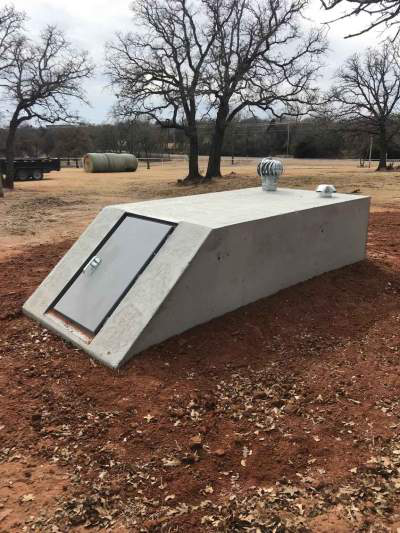
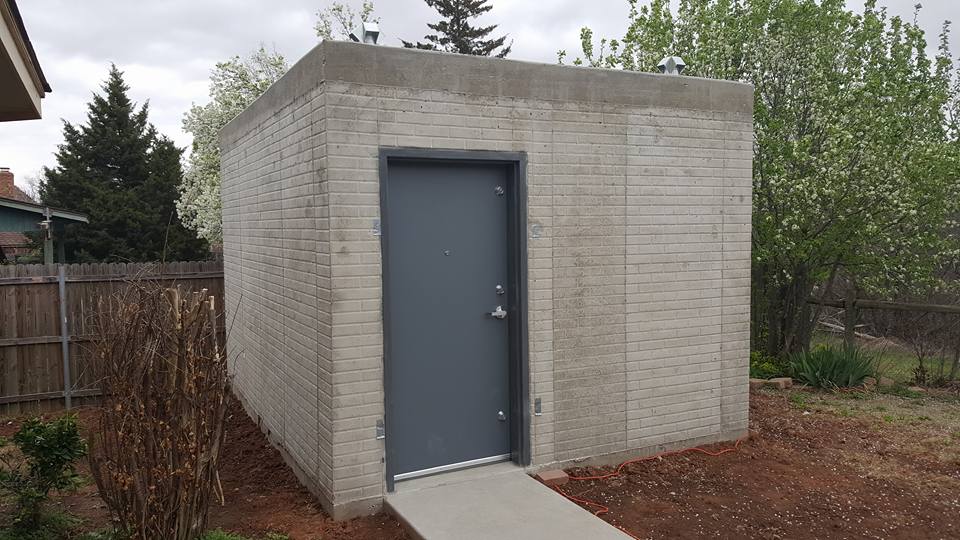
In the past, Oklahomans leaned toward “fraidy holes”—those damp, concrete bunkers in the backyard. Today, the trend has shifted heavily toward above-ground steel safe rooms. Why?
The Case for Above-Ground Safe Rooms:
-
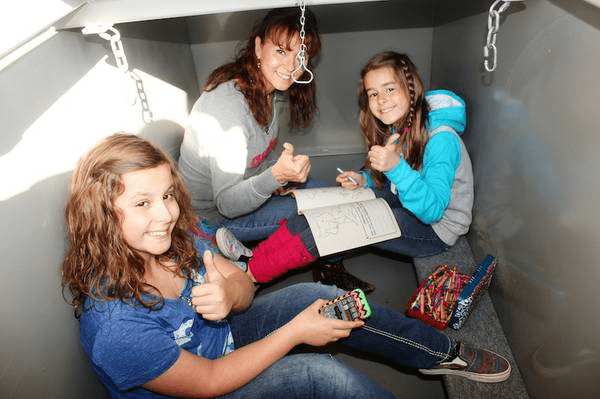
Accessibility: If you have elderly family members, toddlers, or pets, trying to navigate a steep ladder during a power outage is dangerous. Safe rooms allow you to walk right in.
-
Installation: We can install an Oklahoma safe room in your garage or an interior room in just 7 to 10 days.
-
No Flooding: Underground shelters often face issues with water seepage, spiders, and snakes. Above-ground units stay clean and dry.
-
Relocation: Because they are bolted to the slab, many models can actually be moved if you sell your home and want to take your investment with you.
The Case for Underground Bunkers:
-
Space Saving: If you have a small lot or no garage space, an exterior underground concrete shelter is a classic choice.
-
Psychological Comfort: Some people simply feel safer being “below the dirt.”
Beyond the Storm: The Multi-Purpose Safe Room
While tornadoes are our primary concern, a safe room serves other vital functions. In the security industry, these are often called “panic rooms.”
1. Protection from Intruders Home invasions are a terrifying reality. A safe room with a bulletproof door and soundproof walls provides a secondary line of defense. If you hear a break-in, you can move your family into the room and call the police from a secure location.
2. Storage for Valuables These rooms are fire-resistant and nearly impossible to break into without heavy industrial equipment. They are excellent places to store birth certificates, family heirlooms, and sensitive documents.
3. Peace of Mind for Parents I often talk to parents who worry about leaving their teenagers home alone. Teaching your children how to access the safe room—and having it equipped with a “burner” phone and a flashlight—gives you a layer of security that a standard deadbolt cannot match.
What Does the Installation Process Look Like?
We pride ourselves on a process that doesn’t disrupt your life. We know you’re busy.
-
Consultation: We determine the best location (usually the garage or a concrete pad).
-
Preparation: We ensure the slab is thick enough to meet anchoring requirements.
-
Placement: The steel unit is delivered and moved into position.
-
Anchoring: We use industrial-grade bolts to secure the room to the concrete. This is the most critical step; the room is only as strong as its connection to the earth.
-
Final Inspection: We ensure the door swings freely and the vents are clear.
The Financial Reality: Costs and Rebates
Is a safe room expensive? It depends on how you look at it.
The cost of a high-quality safe room is usually comparable to a mid-range used car. However, unlike a car, a safe room adds value to your home. In Oklahoma, homes with pre-installed storm shelters sell faster and often for more money.
Furthermore, many Oklahomans qualify for the Sooner Safe Rebate Program. This lottery-based system can provide up to $2,000 toward the cost of your shelter. We always encourage our customers to register for these programs early, as the deadlines are strict.
Stocking Your Shelter: Don’t Enter Empty-Handed
A safe room is only half the battle. You need to be prepared for what happens after the storm. If a tornado hits, you might be in that room for a while before it’s safe to exit.
The Essential Safe Room Kit:
-
Water: At least one gallon per person.
-
Communication: A battery-powered NOAA weather radio and a whistle (to signal rescuers).
-
First Aid: A comprehensive kit including any daily medications.
-
Footwear: Never go into your shelter barefoot. If your house is damaged, you will need thick-soled shoes to walk through debris.
-
Pet Supplies: A leash and some treats to keep your four-legged family members calm.
Frequently Asked Questions
Can an above-ground safe room really survive an EF5? Yes. When properly engineered and anchored to a reinforced concrete slab, above-ground safe rooms have a proven track record of surviving the most violent tornadoes ever recorded.
How do I breathe inside a safe room? All FEMA-compliant safe rooms are designed with specific ventilation slats. These are located to allow air circulation while remaining small enough to prevent debris from entering.
Where is the best place to put a safe room? The garage is the most popular location. It provides easy access from the house without taking up living space, and it usually has the thickest concrete slab.
How long does installation take? At Oklahoma Shelters, we can typically have your safe room installed and ready for use in 7 to 10 days from the time of your order.
A Neighborly Final Word about getting a Safe Room
I’ve lived through the sirens. I’ve seen what the wind can do to a neighborhood. But I’ve also seen the look of relief on a mother’s face when she knows her kids are behind 1/4 inch of American-made steel.
Don’t wait until the clouds start rotating to think about your safety. It is much better to have a safe room and never need it than to need one and not have it. Whether you are worried about the next “Big One” or you want a secure place to hide from an intruder, we are here to help.
If you have questions about which model fits your home, reach out. We’ve been doing this for years, and we’d be honored to help protect your family.