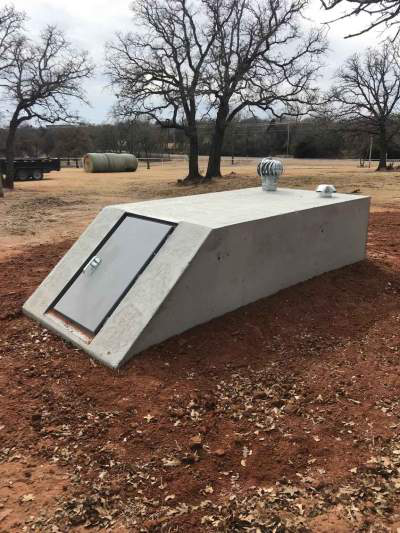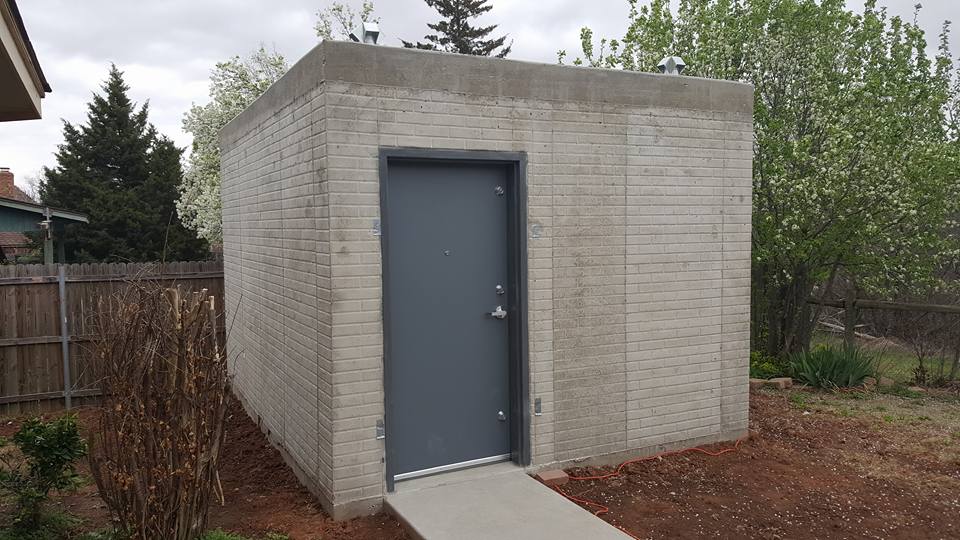
The United States is the most tornado-prone country in the world. According to recent meteorological studies, the nation experiences an average of over 1,000 tornadoes each year. In high-activity years, such as 2024, that number can climb even higher, with preliminary data showing near-historic levels of activity. For families in Oklahoma, these storms pose a serious and recurring threat to both life and property.
When severe weather sirens sound, the first priority is finding a place of absolute safety. Many homeowners are now looking beyond traditional closets or bathrooms and evaluating underground bunkers. But are they truly the safest option? Let’s delve into the science of bunkers, their structural integrity, and the critical safety features that make them a robust defense against nature’s most violent winds.
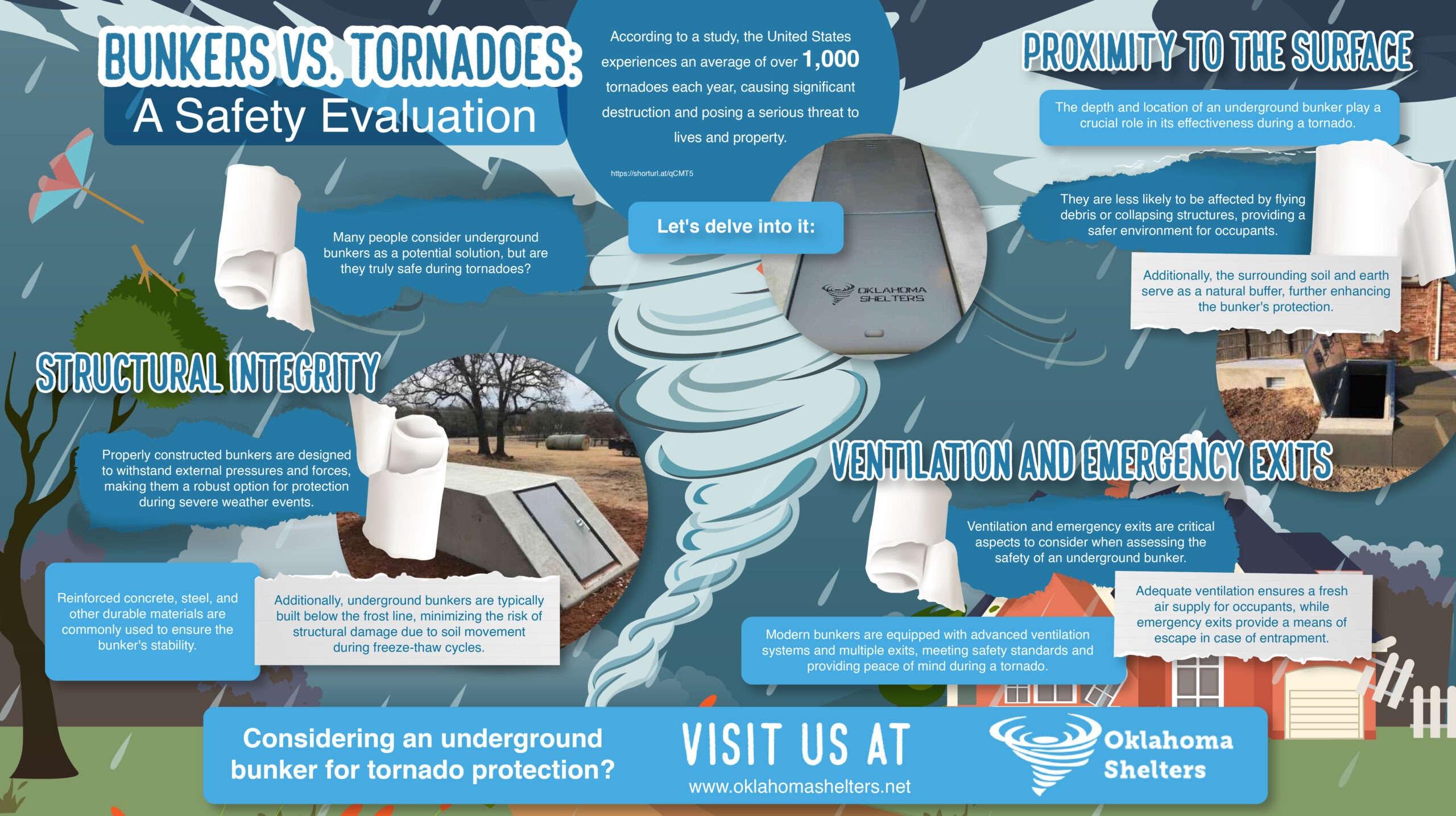
Proximity to the Surface: The Natural Buffer of Earth
The primary reason underground bunkers are effective is their location. By moving below the surface, you utilize the earth itself as a shield. The depth and location of a bunker play a crucial role in its overall effectiveness.
The Shielding Effect of Soil
In an EF5 tornado, winds can exceed 200 mph, turning ordinary objects into high-velocity projectiles. Above-ground structures must be engineered to resist the direct impact of these missiles. However, an underground bunker is naturally protected. Because it is situated below grade, it is far less likely to be affected by flying debris or collapsing residential structures. The surrounding soil serves as a natural buffer, absorbing energy and providing a safer environment for occupants.
Understanding Depth and Debris
A properly installed bunker is placed at a depth that ensures several feet of earth sit above the ceiling. This depth is vital for the “missile effect.” Even if a heavy object, like a car or a large tree, is dropped onto the site by a tornado, the earth distributes that force before it can compromise the bunker’s roof. This layer of protection is something that standard home walls simply cannot replicate.
Structural Integrity: Building to Withstand the Pressure
A hole in the ground is not a bunker. True structural integrity comes from engineering that accounts for the immense external pressures and forces of a storm event.
Materials Used in High-Quality Bunkers
Properly constructed bunkers are made from the most durable materials available. At Oklahoma Shelters, we focus on:
-
Reinforced Concrete: Known for its immense compressive strength, reinforced concrete is a premier choice for underground safety.
-
High-Grade Steel: Steel plate bunkers are celebrated for their resistance to cracking and their ability to create a completely watertight seal.
The Importance of the Frost Line
Structural stability is not just about the storm; it is about the seasons. Underground bunkers are typically built below the frost line. In Oklahoma, this minimizes the risk of structural damage caused by soil movement during freeze-thaw cycles. When soil freezes and thaws, it expands and contracts. If a shelter is too shallow, these cycles can cause the structure to shift or crack over time. By placing the foundation deep enough, the bunker remains stable and secure for decades.
Ventilation and Emergency Exits: Critical Life Safety
While structural strength protects you from the wind, internal systems keep you safe while you wait for the storm to pass. Ventilation and emergency exits are critical aspects to consider when assessing any underground safety solution.
Ensuring a Fresh Air Supply
When multiple people occupy a small, sealed space, air quality can degrade quickly. Adequate ventilation is essential to ensure a continuous fresh air supply and to prevent the buildup of carbon dioxide.
-
FEMA Guidelines: Professional shelters are designed to meet FEMA standards, which recommend specific airflow rates—often around 15 cubic feet per minute (cfm) per person.
-
Debris-Resistant Vents: Modern bunkers use protected air vents that allow air to circulate while keeping out dirt, water, and storm debris.
Managing the Risk of Entrapment
The greatest fear many homeowners have regarding underground shelters is being trapped by debris. If a house collapses over a garage unit or an outdoor cellar, the exit could be blocked.
-
Hydraulic or Gas-Strut Assisted Doors: These doors are designed to be pushed open from the inside, even if several hundred pounds of debris have landed on top of the hatch. This ensures that you have a reliable means of escape once the danger has passed.
Comparing Bunkers to Standard Storm Shelters
While all storm shelters provide safety, “bunkers” often offer a different level of functionality compared to compact garage units.
Space and Usability
Underground bunkers are typically more spacious than standard residential storm shelters. They are designed for:
-
Extended Occupancy: If a storm is followed by a long-term power outage or road blockage, a bunker provides a comfortable space to wait.
-
Storage Capacity: There is ample room for long-term emergency kits, including extra water, food, and bedding.
-
Multi-Purpose Security: Beyond tornadoes, many families use bunkers as a “safe room” in the event of a home invasion, providing a hidden and secure retreat.
Peace of Mind
Modern bunkers are equipped with advanced features such as integrated GPS technology. This allows emergency responders to locate your shelter even if surface landmarks are destroyed. Knowing that your location is documented and your structure is FEMA-compliant provides unparalleled peace of mind.
Why Professional Installation is Non-Negotiable
Building an underground bunker is a complex engineering task. It involves mapping out utility lines, managing groundwater levels, and ensuring the anchoring system is sufficient for Oklahoma’s specific soil composition.
A DIY or uncertified bunker can pose significant risks, including flooding, structural collapse, or suffocation due to poor ventilation. Partnering with a professional installation team ensures that every safety standard is met, from the thickness of the steel to the efficiency of the air filtration system.
Secure Your Family’s Future with Oklahoma Shelters
Considering an underground bunker for tornado protection? The time to evaluate your options is now, before the next severe weather season begins. Whether you are looking for a compact unit for a small family or a high-capacity bunker for a business, we have the expertise to help you build a safe haven.
Our bunkers are engineered for durability, designed for comfort, and tested against the strongest storms on Earth.
Ready to take the next step in storm safety?
Oklahoma Shelters: Protecting What Matters Most.