Finding Your Fortress: An Expert Guide to Top Storm Shelters
If you have spent even one spring in the Great Plains, you know the feeling. The air turns thick and heavy. The birds go quiet. Then, that unmistakable green tint bleeds into the clouds. In Oklahoma, the question isn’t if a storm is coming, but when. I have sat through the sirens more times than I can count. I have seen Moore, OK and El Reno, OK through the eyes of someone who knows the wind can take everything in seconds.
That is why we talk about shelters. It isn’t just about steel or concrete. It’s about that one spot on Earth where you can stand while an EF5 passes overhead and know your children are safe. But which one do you choose? There is a lot of noise out there. Let’s cut through it and look at the real-world options that actually save lives.
The Evolution of the Oklahoma Storm Shelter
Decades ago, we had root cellars. They were damp, spider-filled holes in the backyard. They worked, but they were far from ideal. Today, engineering has changed the game. We now have units that can be installed inside your garage, under your floor, or even as a dedicated room in your house.
When we look at the top storm shelters for protection, we evaluate them on three main pillars:
-
Structural Integrity: Can it withstand 250 mph winds and flying 2x4s?
-
Accessibility: Can you get your 80-year-old grandmother and your scared German Shepherd inside in under 30 seconds?
-
Space and Comfort: Will it fit your family without inducing a panic attack?
Above-Ground Steel Safe Rooms: The Modern Standard
There is a common myth in the South that you have to be underground to survive an EF5. That is simply false. Modern steel safe rooms are designed to withstand the same forces as underground bunkers. In fact, many people prefer them now. Why? Because they are incredibly accessible.
Why Choose a Safe Room?
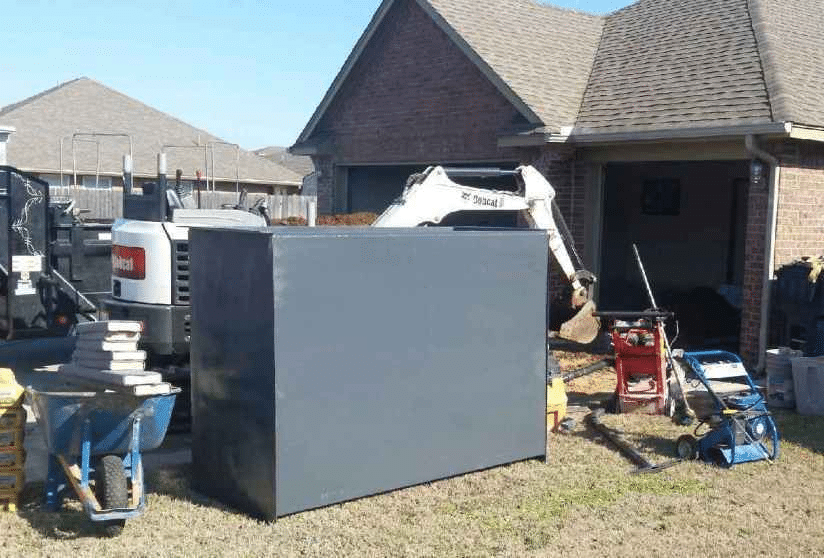
Safe rooms are typically installed on an existing concrete slab, often in the garage or a dedicated interior room. They are built from thick, reinforced steel with heavy-duty bolting systems.
-
No Stairs: This is the biggest selling point. If you have mobility issues, use a wheelchair, or have elderly family members, stairs are a hazard during a disaster.
-
Debris Protection: They are tested at Texas Tech University’s Wind Institute. They can take a direct hit from a 15-pound wooden stud traveling at 100 mph.
-
Multi-Use Space: When it isn’t storming, many people use these as “panic rooms” for home security or as a secondary closet.
Think about the speed of a tornado. If the siren goes off and you have to run across a rain-slicked yard to a cellar, you are at risk. A safe room in your garage allows you to step through a door and lock it in seconds.
Underground Garage Shelters: The Space Saver
If you are like me, you probably value your garage space. You don’t want a giant steel box taking up a parking spot. This is where the underground garage shelter shines. We cut out a section of your garage floor, excavate, and drop in a heavy-duty steel unit.
The Engineering Behind Underground Units
These units sit flush with the floor. You can literally park your car right over them. When the clouds start to swirl, you move the car back a few feet, slide the door open, and head down.
-
Ultimate Ground Shielding: Being below ground means the wind cannot get under the unit to lift it. The earth acts as a natural buffer.
-
Space Efficiency: Since it is under the floor, you lose zero square footage in your home or garage.
-
Custom Fit: They come in various sizes, usually accommodating 6 to 12 people depending on the model.
Do you have a small garage? This is likely your best bet. Just remember, you need to be physically able to climb a short ladder or set of stairs to use this model effectively.
Concrete Storm Shelters: The Classic Fortress
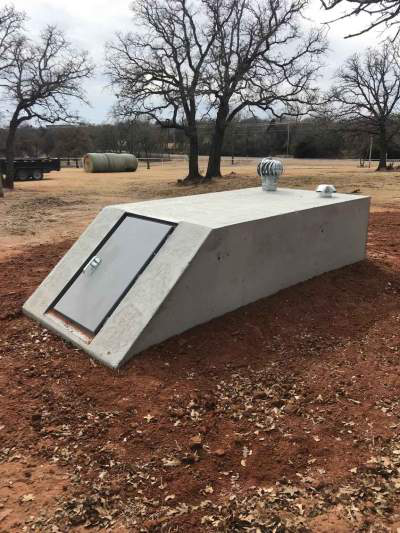
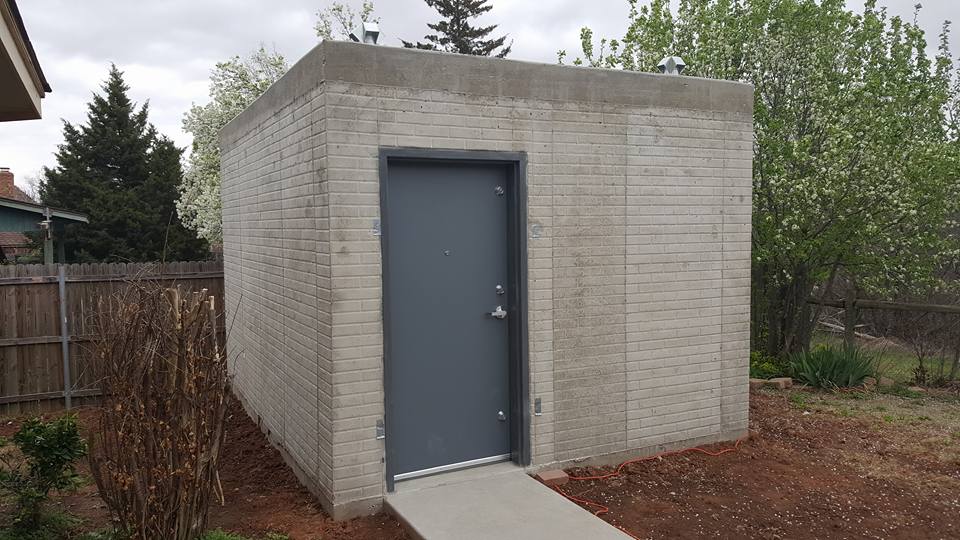
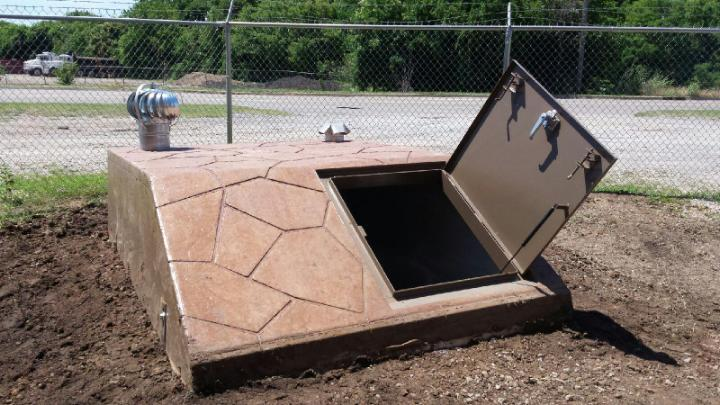
For many, the sight of a reinforced concrete mound in the yard is a symbol of safety. These are the descendants of the old root cellars, but modernized with high-strength pre-cast concrete and steel doors.
Pros and Cons of Concrete
Concrete is massive. It doesn’t vibrate. It feels permanent.
-
Durability: Concrete doesn’t rust. If installed correctly, it can last for generations.
-
Large Capacity: These are often the choice for community shelters or large families because they can be built to accommodate dozens of people.
-
Exterior Installation: If you don’t have room in your garage, these sit out in the yard.
However, there is a catch. You have to go outside. If there is large hail (which usually precedes a tornado in Oklahoma), running to an outdoor concrete shelter can be dangerous. If you choose this path, make sure it is as close to your back door as possible.
Underground Bunkers: For Large Families and Longevity
Sometimes, a small 4×6 box isn’t enough. If you have a large extended family or you want to store emergency supplies for a long-term stay, an underground bunker is the way to go. These are deeper, larger, and often customized.
-
Airflow Systems: Bunkers require sophisticated ventilation to ensure everyone stays comfortable during a long wait.
-
Supply Storage: Many people keep “go-bags,” water, and medical kits inside these units year-round.
-
Custom Sizing: We can install units that hold up to 20 people or more.
Is a bunker overkill? Not if you have 15 people to protect. When the big one hits, having enough elbow room to keep everyone calm is a luxury that becomes a necessity.
The Science of Survival: EF5 Ratings and FEMA Compliance
We don’t just guess when it comes to safety. Every shelter we discuss meets or exceeds FEMA 320 and 361 standards. What does that mean for you? It means the unit has been through the “cannon test.”
Engineers literally fire debris at these units to see if they fail. To be EF5 rated, the shelter must withstand the impact without the door bucking or the walls piercing.
-
Ventilation Protection: Vents are designed so that debris cannot fly inside, but fresh air can still circulate.
-
Anchoring Systems: An above-ground safe room is only as good as its bolts. We use high-grade industrial anchors to tie the unit to your concrete slab.
Installation: What Does the Process Look Like?
I often get asked if installing a shelter will ruin the house for weeks. The answer is no. Most of our top-tier shelters can be installed in a single day.
For a Safe Room, we move the unit into place, drill into the slab, and anchor it. It takes about 3 to 5 hours.
For an Underground Garage Shelter, it’s a bit more involved. We saw the concrete, dig the hole, and set the unit. We then pour new concrete around the rim to seal it. Even then, we are usually done in a day.
You don’t have to live in a construction zone to get the protection you need. We keep it clean, fast, and professional.
Factors to Consider Before You Buy
Choosing a shelter is a personal decision. Before you sign a contract, ask yourself these questions:
-
How many people (and pets) need to fit? Don’t forget the dog. In a storm, your pets will be terrified. You need room for their crates or for them to sit at your feet.
-
Where will it go? Check for utility lines if you are digging. Check the height of your garage ceiling if you are going above ground.
-
What is my budget? Concrete is often the most affordable, while custom bunkers are on the higher end. Safe rooms sit comfortably in the middle.
-
Do I have mobility concerns? If stairs are hard on your knees now, imagine trying to navigate them during a power outage while the wind is screaming.
The Psychological Advantage: Peace of Mind
We talk about wind speeds and steel thickness, but we often ignore the most important benefit: your mental health. Oklahoma weather is stressful. Every time the local news brings out the red maps, your heart rate goes up.
When you have a top-rated storm shelter, that stress changes. You no longer wonder if the interior closet is “good enough.” You know exactly where you are going. You have a plan. That peace of mind is worth every penny of the investment.
Why Oklahoma Shelters?
We live here. We work here. We aren’t a national corporation that doesn’t understand the difference between a dryline and a cold front. We know the history of storms in this state.
We offer:
-
Custom Safe Rooms tailored to your home’s layout.
-
Underground Bunkers for maximum protection.
-
Garage Shelters that preserve your parking space.
-
Expert Installation that meets all FEMA requirements.
We usually have our units ready and installed within 7 to 10 days. When the forecast starts looking grim, you don’t want to be on a three-month waiting list.
Summary of Top Storm Shelters
-
Steel Safe Rooms: Best for accessibility, no stairs, and indoor convenience.
-
Underground Garage Shelters: Best for saving space and utilizing the earth’s natural protection.
-
Concrete Shelters: Best for large groups and durability in outdoor settings.
-
EF5 Rating: Ensures the unit can withstand 250 mph winds and heavy debris impact.
-
Installation: Most units are installed in less than a day with minimal disruption.
Take the Next Step for Your Family with a Oklahoma Storm Shelter
The sky will turn green again. The sirens will eventually sound. When that moment comes, will you be ready? Don’t leave your family’s safety to chance or a flimsy interior hallway.
Email us today at sales@oklahomashelters.net or give us a call. We can provide a free estimate and help you determine which of these top-rated shelters is the perfect fit for your home.
Oklahoma Shelters: 405-367-7901