

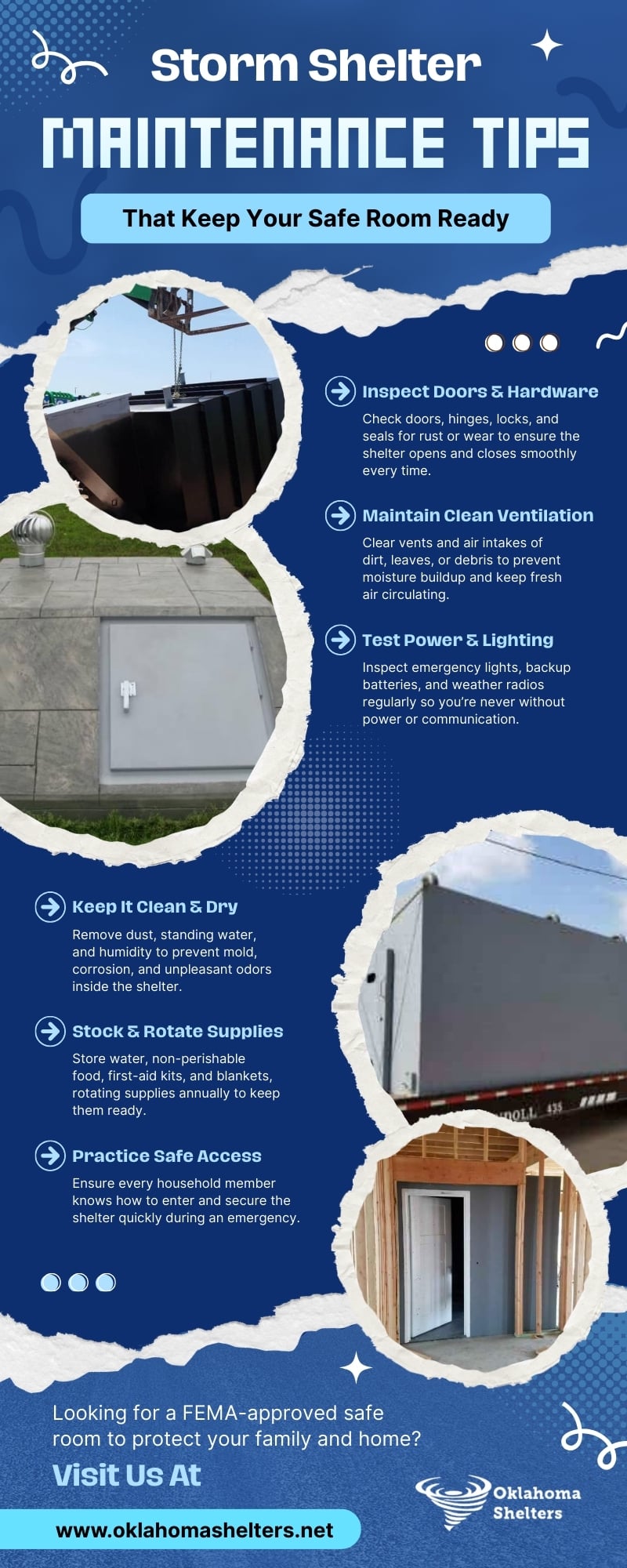
Storm shelter maintenance tips start with a simple habit: check the unit before storm season, not after a warning is issued. Regular checks, ventilation, lighting, supplies, and a clear path in are what make a safe room dependable when severe weather strikes.
Storm Shelter Maintenance Tips That Keep a Safe Room Ready
A shelter only helps if the door opens, the interior is usable, and your household can get in quickly. Walk the unit a few times a year, especially in early spring, and fix small issues before they become problems. Look at seals, latches, lighting, and anything stored on the floor that could block entry. If you share the space with seasonal storage, keep a clear aisle to seating or benches so everyone can get in and close the door without delay. Review these storm shelter maintenance tips each season so your family can rely on the unit when conditions change.
Checks for Air, Power, and Supplies
Proper ventilation and a reliable light source matter once the door is shut. Test vents and battery lanterns, and replace stale water, first-aid items, and medications on a schedule. Clean dust and debris so moisture does not linger on floors or walls. If you notice condensation, rust, or a door that sticks, address it early. Ready.gov tornado guidance also emphasizes keeping a kit you can reach in a hurry, which is easier when the shelter stays organized year-round.
Keep the Path Clear and Ask for Help
Clear access is part of maintenance, not an afterthought. Trim plants at outdoor hatches, keep vehicles from blocking a garage unit, and make sure every family member knows how to open the door, including in the dark. Review National Weather Service tornado safety guidance so your household plan matches official advice, then practice the route. When you want a professional look at hardware, drainage, or a replacement unit, compare types of storm shelters or see concrete storm shelters, and talk with Oklahoma Shelters about a checkup that keeps your safe room ready. See Ready.gov tornado preparedness guidance.


