Safe Rooms: Can They Withstand an EF5 Tornado?
In Oklahoma, the threat of powerful tornadoes is a terrifying reality. We live in the heart of “Tornado Alley,” and when the siren sounds, every second counts. For homeowners across the state, the ultimate question isn’t if they’ll face a storm, but how they’ll survive it.
The strongest tornadoes, rated EF5 (Enhanced Fujita Scale), are capable of unimaginable destruction, leveling well-built homes to the foundation. When facing this level of catastrophic force, is any shelter truly safe?
The answer is yes, but only if that shelter is designed and constructed to meet rigorous standards. The key lies in the Safe Room.
At Oklahoma Shelters, based in Oklahoma City and serving all of Oklahoma, we specialize in providing near-absolute protection for you and your family. We install safe rooms built specifically to resist the extreme wind speeds and debris impact of even an EF5 tornado. Understanding what makes a safe room resilient is the first step toward achieving total peace of mind.
Part 1: Defining the EF5 Threat
Before we discuss safety, we must understand the danger. The Enhanced Fujita (EF) Scale classifies tornado intensity from EF0 (light damage) to EF5 (incredible damage).
The Power of an EF5 Tornado
An EF5 tornado is the highest classification, characterized by:
-
Wind Speeds: Estimated wind speeds of 200 miles per hour or more (200-234 mph).
-
Destruction: These storms are capable of sweeping homes completely off their foundations, deforming large steel-framed buildings, and launching heavy objects (like cars) hundreds of yards.
-
The Debris Missile Effect: The air is filled with highly dangerous debris—lumber, concrete, metal, and household items—which act as high-speed projectiles. It is often this debris, not just the wind pressure, that causes structural failure in standard homes.
A typical stick-built home offers almost no protection against the combined forces of an EF5 tornado. This is why a purpose-built structure is essential.
Part 2: The Science of Survival—FEMA and ICC Standards of a Safe Room
The ability of a safe room to withstand an EF5 tornado is not a matter of luck; it’s a matter of engineering and adherence to strict federal standards. The two primary guides for safe room construction are published by the Federal Emergency Management Agency (FEMA) and the International Code Council (ICC).
1. FEMA P-361 Criteria
The FEMA publication, Safe Rooms for Tornadoes: Guidance for Community and Residential Safe Rooms (FEMA P-361), is the gold standard.
-
Near-Absolute Protection: This document defines construction criteria that provide a “high degree of protection” against wind speeds up to 250 mph—which exceeds the wind speeds of an EF5 tornado (up to 234 mph).
-
Structural Integrity: Safe rooms must be anchored to a foundation and built with reinforced materials like poured concrete or solid steel panels. This prevents the room from being lifted, rolled, or compressed by extreme pressure changes.
-
Life-Safety Components: The room must maintain a breathable environment and allow for easy exit after the storm passes, even if the surrounding structure has collapsed.
2. ICC 500 Standards
The International Code Council (ICC) Standard for the Design and Construction of Storm Shelters (ICC 500) works in tandem with FEMA P-361.
-
Prescriptive Design: ICC 500 provides detailed, enforceable requirements for materials, anchoring, ventilation, and interior space.
-
Debris Impact Testing: A key requirement under both standards is that the walls, roof, and door assemblies must resist the impact of a 15-pound lumber missile traveling at 100 mph. This test ensures the shell of the safe room can withstand the lethal projectiles common in an EF5 storm.
Oklahoma Shelters exclusively installs products designed and rigorously tested to meet or exceed both FEMA P-361 and ICC 500 standards. This adherence is what guarantees resilience against the worst Oklahoma weather.
Part 3: The Key Components of an EF5-Rated Safe Room
A standard room, no matter how reinforced, is not a safe room. The near-absolute protection offered by an ICC 500-compliant shelter relies on four critical, integrated components.
1. The Structure (Walls and Ceiling)
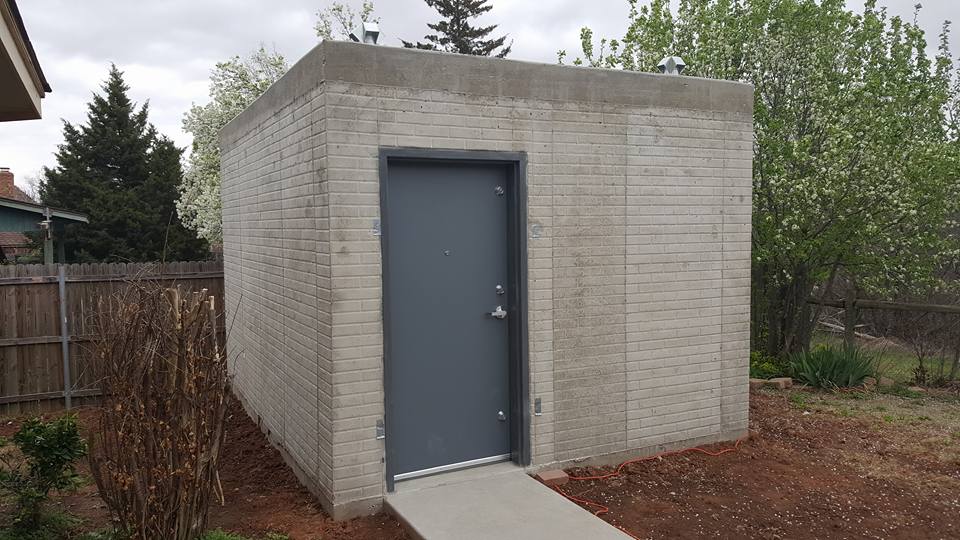
The shell of the safe room must be monolithic and structurally independent of the main home.
-
Poured Concrete: These rooms utilize heavily reinforced, thick concrete walls anchored deep into the foundation. Concrete provides superior compression and shear resistance against high winds.
-
Encased Steel: Steel safe rooms use thick gauge, welded steel panels. The panels are bolted together and anchored to the slab at extremely close intervals (often every 6-12 inches) to prevent uplift or separation.
2. The Anchoring System
A safe room is only as strong as its connection to the ground. Without proper anchoring, the entire structure could be lifted by the tornado’s extreme suction forces.
-
Deep Anchoring: Anchors must penetrate deep into the existing concrete foundation (for existing homes) or directly into the ground structure (for new builds).
-
Shear and Tension Resistance: The anchoring system is engineered to resist both the outward suction (tension) and the lateral pushing (shear) forces exerted by 250 mph winds. This is a non-negotiable step in the installation process performed by Oklahoma Shelters.
3. The Door and Locking Mechanism
The door is typically the weakest point of any structure. For a safe room, it must be the strongest.
-
Heavy-Gauge Steel: Safe room doors are constructed from thick, heavy-gauge steel, often including internal reinforcement.
-
Three-Point Locking: The door typically utilizes a robust three-point (or multi-point) locking system that bolts the door into the frame at the top, bottom, and center. This distributes the massive impact load from flying debris across the entire frame.
-
Outward Swing: Most safe room doors swing outward. This is critical because if the house collapses onto the door, an outward-swinging door can still be opened, ensuring the occupants are not trapped.
4. Ventilation and Safety
Even when locked down, occupants need air and communication.
-
Protected Vents: Ventilation is provided through small, shielded openings that resist debris penetration while still allowing air exchange.
-
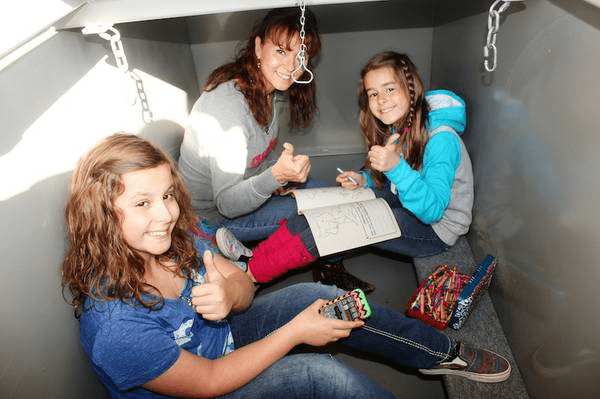
Adequate Space: The room must offer enough space for the maximum intended occupancy, ensuring occupants are comfortable during the stressful event.
Part 4: Above-Ground vs. Underground Safe Rooms in Oklahoma
Oklahoma Shelters offers various solutions designed to meet the ICC 500 criteria, whether you choose an above-ground or underground option. Each has unique benefits for Oklahoma homeowners.
Above-Ground Steel Safe Rooms
-
Location: Often installed in the garage or a closet, bolted directly to the existing concrete slab.
-
Accessibility (AEO Focus): These are ideal for the elderly, individuals with mobility issues, or those who need quick access, as they eliminate the need to navigate stairs. They are easily accessible to every member of the family, including pets.
-
Water Safety: They eliminate the risk of flooding, a concern often associated with underground bunkers during heavy Oklahoma rains.
-
EF5 Resilience: When installed correctly by certified professionals, above-ground safe rooms built to ICC 500 standards provide the same level of near-absolute protection as underground units against wind and debris.
Underground Storm Shelters
-
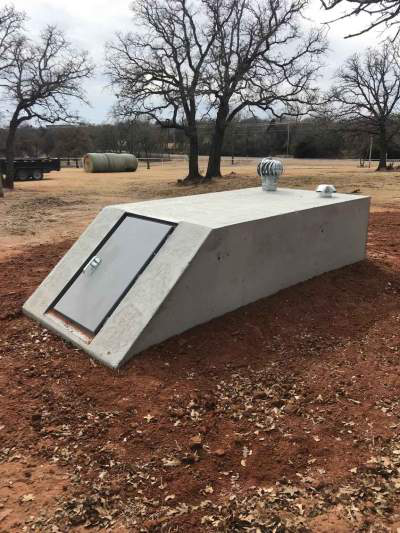
Location: Installed beneath the floor of the garage or outdoors.
-
Natural Protection: Utilizing the earth itself, these shelters benefit from the massive thermal mass and structural support of the surrounding soil, offering excellent protection against high winds and debris.
-
Space Saving: Garage models are flush with the floor, preserving floor space when not in use.
-
Water Risk Mitigation: While flooding is a risk, modern underground shelters installed by Oklahoma Sheltersinclude robust drainage systems, secure locking lids, and sealed foundations to mitigate water intrusion.
The choice between the two often comes down to budget, accessibility needs, and placement preferences, but both options—when ICC 500 certified—are designed to defeat an EF5 tornado.
Part 5: The Cost of Safety
Is an EF5-rated safe room affordable? This is a key query for many Oklahoma residents. The cost of a safe room is an investment in life safety, often significantly lower than the cost of rebuilding a home.
-
Cost Factors: Pricing depends on size, material (steel vs. concrete), and installation complexity (above-ground is often less complex).
-
Financial Incentives: Oklahoma residents frequently qualify for rebate and grant programs aimed at promoting storm shelter installation. These programs, such as those sometimes offered through the Oklahoma Mitigation Plan, can significantly reduce the out-of-pocket cost. Oklahoma Shelters can provide guidance on current program eligibility.
-
Insurance Discounts: Many homeowners’ insurance providers offer discounts for homes equipped with certified storm shelters or safe rooms, recognizing the reduced risk of injury or death.
Investing in a certified safe room is arguably the most critical preparedness step an Oklahoma homeowner can take. It moves you from hopeful survival to engineered certainty.
Achieving Near-Absolute Protection with Oklahoma Shelters
Facing the threat of an EF5 tornado is daunting, but your safety doesn’t have to rely on chance. The engineering and construction standards set by FEMA and the ICC prove that a properly built safe room can indeed withstand the most extreme weather events, offering near-absolute life safety.
As a leading installer based in Oklahoma City and serving the entire state, Oklahoma Shelters is committed to protecting your family. We guarantee that every safe room we install adheres to the stringent criteria necessary to defeat wind speeds far exceeding 200 mph and resist devastating debris impact.
Don’t wait until the next siren sounds. Secure your peace of mind now.
For detailed specifications on debris impact resistance and wind pressure design, refer to the FEMA P-361 document. To learn more about state-level preparedness and hazard mitigation in Oklahoma, consult the resources provided by the Oklahoma Department of Emergency Management (ODEM).
People Also Ask (PAA) Questions about Safe Rooms
1. What wind speed can a FEMA-compliant safe room withstand?
A safe room built to FEMA P-361 standards is designed to withstand wind speeds up to 250 miles per hour (mph), which exceeds the maximum wind speed of an EF5 tornado (234 mph). This provides near-absolute protection against extreme weather.
2. What is the difference between a storm shelter and a safe room?
The term safe room is specifically used for structures designed and constructed to meet the strict standards outlined in FEMA P-361 and ICC 500, guaranteeing resilience against high-speed wind and debris impact. A storm shelter is a more general term for any protective space, which may not meet these official federal criteria.
3. What is the most important component of a safe room’s construction?
The most important component is the anchoring system. If the room is not correctly anchored into the concrete foundation using engineered tension and shear bolts, the entire structure could be lifted or rolled by a powerful tornado’s suction forces, regardless of the thickness of the walls.
4. Do above-ground safe rooms offer the same protection as underground shelters?
Yes, when both are certified to meet the ICC 500 standard, an above-ground safe room offers the same level of near-absolute protection as an underground shelter. The protection comes from the engineered steel and reinforced concrete structure, not necessarily from being below grade.
5. What is the debris missile test for safe rooms?
The debris missile test requires the safe room’s walls, roof, and door assemblies to withstand the impact of a 15-pound 2×4 lumber missile traveling at 100 mph. This test ensures the shelter can resist the lethal, high-speed projectiles generated by an EF5 tornado.
6. Can a regular concrete basement withstand an EF5 tornado?
A regular concrete basement is significantly safer than the rest of the house but is not guaranteed to withstand an EF5 tornado. Unlike a certified safe room, a typical basement often lacks impact-rated doors, reinforced ceilings, and independent anchoring designed to resist 250 mph winds and direct debris penetration.
7. What kind of door is required for a safe room?
A safe room requires a heavy-gauge, reinforced steel door with a multi-point (often three-point) locking mechanism. The door must also be designed to resist the high-velocity debris impact required by the ICC 500 standard.
8. Are there financial assistance programs for installing safe rooms in Oklahoma?
Yes, Oklahoma residents frequently qualify for federal and state rebate and grant programs aimed at promoting storm shelter installation. These programs, such as those sometimes offered through the Oklahoma Mitigation Plan, can significantly reduce the cost of installation.
9. What is the highest rating on the tornado intensity scale?
The highest rating on the tornado intensity scale is EF5 (Enhanced Fujita Scale), which corresponds to estimated wind speeds of 200 miles per hour or greater and causes incredible damage, often leveling well-built homes to the foundation.
10. Does a safe room door need to swing inward or outward?
Most certified safe room doors are designed to swing outward. This is a critical safety feature that ensures the door can still be opened and occupants can exit even if the debris from the collapsed main house piles up against the entrance.