The Urgent Need for Community Storm Shelters in Mobile Home Parks
Oklahoma is famous for its wide-open plains and its violent weather. For many residents, mobile homes provide an affordable and comfortable way to live. However, these structures face a unique set of risks during tornado season. Standard mobile homes, even when properly anchored, cannot withstand the intense winds of a significant tornado.
When the sirens sound in Oklahoma City, Moore, or Tulsa, residents in traditional houses may head to a hallway or a closet. For those in mobile home parks, those options are simply not safe enough. This is why community storm shelters are not just a luxury. They are a life-saving necessity for every park in the state.
Oklahoma Shelters is a leader in high-quality safety installations. Based in Oklahoma City, we serve every corner of the state. We specialize in providing the heavy-duty protection required to keep entire neighborhoods safe when the sky turns dark.
The Physical Vulnerability of Mobile Homes
Mobile homes are lightweight by design. This makes them easy to transport and affordable to build. But these same qualities make them incredibly vulnerable to high winds. Even a weak EF1 tornado can flip a mobile home or strip its roof.
According to the National Oceanic and Atmospheric Administration (NOAA), a large percentage of tornado-related fatalities occur in mobile homes. The problem isn’t just the wind speed. It is also the debris. In a mobile home park, units are often close together. If one unit is destroyed, it becomes a source of flying debris that can damage surrounding homes.
An anchored mobile home may stay on its foundation during a straight-line wind event. But a direct hit from a tornado creates lift and rotational forces that standard anchors cannot resist. Without a dedicated type of storm shelter nearby, residents are left with very few survival options.
The Myth of the “Safety Spot” in a Trailer
Many residents are taught to “go to the bathtub” or “lie in a ditch.” While these are better than standing by a window, they are not reliable survival strategies in a major Oklahoma storm.
In a traditional home with a foundation, an interior room might offer some protection from a weak storm. In a mobile home, there is no “safe” interior room. If the structure is lifted or crushed, the interior walls provide almost no protection.
A community storm shelter provides a designated, engineered safe zone. It removes the guesswork and the panic of trying to find a place to hide at the last second.
Why Community Shelters Make Economic Sense
For many mobile home park owners, the cost of installing individual shelters for every unit is prohibitive. However, a large community shelter offers a centralized, cost-effective solution.
Community shelters are designed to hold dozens or even hundreds of people. By pooling the safety requirements of the entire park into one or two large structures, owners can provide maximum protection for a lower cost per resident.
Furthermore, having a community shelter increases the value of the park. It makes the community more attractive to potential tenants. In Oklahoma, safety is a top priority for renters. A park with a visible, reliable community storm shelter will always have a competitive advantage over one that leaves residents to fend for themselves.
Navigating FEMA Standards and Requirements
Community shelters are held to a higher standard than residential units. They must meet FEMA P-361 and ICC-500 requirements. These standards ensure the structure can withstand 250 mph winds and the impact of flying 2×4 lumber.
At Oklahoma Shelters, we ensure every community project meets these rigorous benchmarks. We handle the engineering, the permitting, and the professional installation.
-
Ventilation: Community shelters must have redundant ventilation systems to keep air flowing even when at full capacity.
-
Accessibility: They must meet ADA (Americans with Disabilities Act) requirements so that every resident, regardless of mobility, can reach safety.
-
Lighting: Integrated emergency lighting is essential for comfort and safety during a power outage.
The Psychological Benefit for Residents
Living in Oklahoma during the spring can be stressful. “Weather anxiety” is a real phenomenon. Residents who know they have nowhere to go are more likely to panic during a storm warning. This can lead to dangerous behavior, such as trying to drive away from a storm in a car.
A community shelter provides a sense of security. It creates a plan of action. When the park manager activates the sirens or the weather radio alerts the residents, everyone knows exactly where to go. This calm, orderly response saves lives.
Improving Park Liability and Insurance
From a business perspective, liability is a major concern. If a predictable disaster occurs and the property owner has provided no means of protection, legal complications can follow.
Installing a FEMA-rated shelter demonstrates a “duty of care” toward your residents. It shows that you have taken proactive steps to mitigate known risks. Many insurance providers look favorably on these types of safety improvements. In some cases, it may even help manage the long-term insurance costs for the property.
Sizing the Shelter Correctly
How large should a community shelter be? At Oklahoma Shelters, we help park owners calculate the necessary square footage.
FEMA guidelines generally recommend five square feet per person for a “standing” shelter and more for those who may need to sit or use wheelchairs. We look at the total number of residents in your park and design a solution that ensures no one is left outside when the doors lock.
Above-Ground vs. Below-Ground Community Options
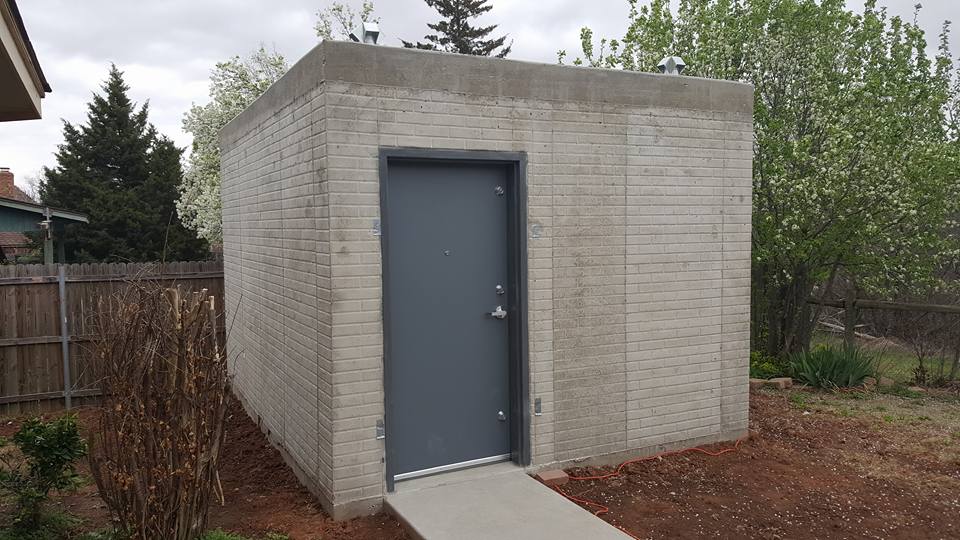
While many Oklahomans are used to underground “cellars,” above-ground safe rooms are often the better choice for large communities.
-
Accessibility: It is much faster and safer to get 50 people into an above-ground room than down a set of stairs.
-
Maintenance: Above-ground steel shelters are easier to keep clean and free of water or pests.
-
Visibility: A large, reinforced safe room serves as a landmark in the park, making it easy to find in the dark or through heavy rain.
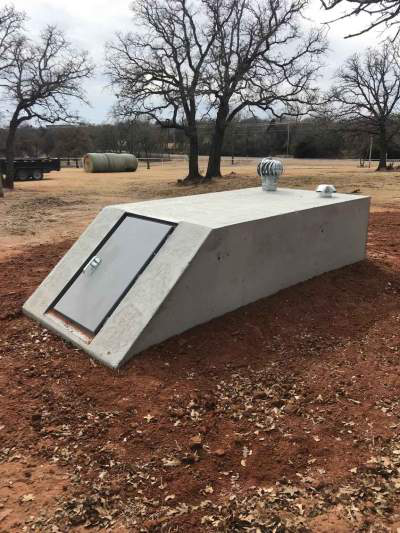
Our types of storm shelters include various large-scale configurations that can be customized to fit the layout of your park.
Dealing with Oklahoma’s Soil and Environment
Oklahoma’s red clay can be tricky for construction. It expands and contracts with moisture levels. Large shelters require specialized foundations to ensure they don’t shift or crack over time.
Oklahoma Shelters is based in Oklahoma City. We understand the local geography. We use reinforced concrete slabs and heavy-duty anchoring systems that are specifically designed for the Oklahoma environment.
The Logistics of a Community Warning System
A shelter is only useful if people get inside it on time. We recommend that park owners pair their community shelter with a clear communication plan.
-
Electronic Alerts: Using a text-alert system to notify residents of a warning.
-
Physical Sirens: Having an audible alarm within the park.
-
Designated Paths: Ensuring the walkways to the shelter are clear and well-lit.
By creating a “Safety Hub” around the shelter, you create a culture of preparedness that protects the entire community.
Government Grants and Funding for Park Owners
There are often federal and state grants available to help offset the cost of community shelters. Programs like the Hazard Mitigation Grant Program (HMGP) are designed to help high-risk areas improve their infrastructure.
Oklahoma Shelters can provide the necessary documentation and quotes needed for these grant applications. We have worked with various municipalities and private owners to navigate the paperwork required to secure funding for safety projects.
Why Choose Oklahoma Shelters?
We are not just installers; we are neighbors. We have lived through the May 3rd and May 20th storms. We know what 200+ mph winds can do.
Our mission is to ensure that no Oklahoman is left without a safe place to hide. We take pride in our craftsmanship and our commitment to safety. When you choose us for your community project, you are choosing a partner that stands behind every weld and every bolt.
You can learn more about our background and our commitment to the state on our About Us page.
Final Thoughts on Community Safety
The conversation around mobile home safety needs to change. It shouldn’t be about why we can’t afford shelters; it should be about how we can afford to be without them.
Every time a major storm hits an unprotected park, the result is tragedy. We have the engineering and the expertise to prevent that tragedy. By installing community shelters, park owners are investing in the most valuable asset they have: the lives of their residents.
Article Recap
-
Mobile homes are structurally incapable of surviving direct tornado hits.
-
“Going to the bathtub” is not a safe strategy for mobile home residents.
-
Community shelters are a cost-effective alternative to individual unit shelters.
-
Professional shelters must meet FEMA P-361 and ICC-500 safety standards.
-
Above-ground safe rooms offer better accessibility for diverse populations.
-
Shelters increase property value, reduce liability, and improve tenant retention.
-
Oklahoma Shelters handles everything from engineering to installation across the state.
-
Funding and grants are often available to help park owners with the cost of installation.
Are you a mobile home park owner or manager? Don’t wait for the next storm season to put your residents at risk. Contact Oklahoma Shelters today at sales@oklahomashelters.net or visit our Storm Shelter Services page for a free quote on a community safe room. Let’s build a safer Oklahoma together.