Norman Storm Shelters: Above Ground or Underground?
Living in Norman, Oklahoma, means accepting a certain reality: the wind is eventually going to get angry. We live in the heart of Tornado Alley. We share our town with the National Weather Center, yet even with the best meteorologists in the world next door, the sky doesn’t care about our plans.
When the sirens start their low, mournful wail, you have minutes to make a decision. That decision shouldn’t be whether your shelter will hold up; it should be which book you’re going to read while you wait for the cell to pass.
One of the most frequent questions I get from neighbors and clients in Cleveland County is about the soil. Norman sits on a specific type of red clay and sandstone mix that behaves differently than the dirt in Tulsa or Lawton. If you are choosing between an underground unit or an above-ground safe room, the ground beneath your feet matters just as much as the clouds above your head.
The Norman Soil Dilemma: Clay and its Quirks
If you’ve ever tried to dig a fence post in Norman during August, you know our soil is basically sun-baked brick. Conversely, after a spring downpour, it becomes a heavy, sticky mess. This high clay content creates “expansive soil.”
Expansive soil swells when it gets wet and shrinks when it dries. This movement puts immense pressure on anything buried inside it. For an underground storm shelter, this means the installation must be precise. If a shelter isn’t engineered for these conditions, the pressure can cause shifting or, in extreme cases, “floating.”
Why Soil Density Matters for Your Safety, in Norman, OK
-
Hydrostatic Pressure: When our red clay gets saturated, it pushes against the walls of an underground tank.
-
Corrosion: Certain soil compositions are more acidic, which can affect the exterior coating of steel shelters over decades.
-
Anchoring: In the sandy-loam areas near the Canadian River, anchoring systems have to go deeper to find purchase compared to the hard-pack clay further east.
Above-Ground Safe Rooms: The New Norman Standard
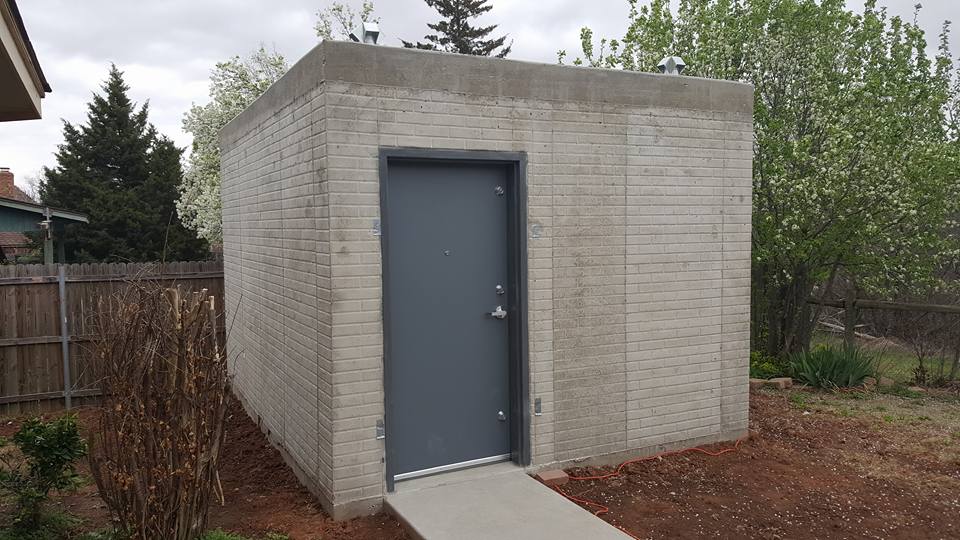
Years ago, everyone wanted to be underground. The thinking was that being below the surface was the only way to stay safe from an EF5. However, engineering has come a long way. Above-ground safe rooms are now the preferred choice for many Norman residents.
The Ease of Access
Think about your family members. Do you have an elderly parent living with you? Do you have small children or a dog that panics during thunder? Getting three kids and a 70-pound Labrador down a steep set of stairs in the dark is a recipe for a secondary emergency.
Above-ground safe rooms, like those we install at Oklahoma Shelters, are typically installed in the garage or as a closet conversion. You simply walk in. There are no stairs to navigate and no heavy lids to lift against the wind.
Testing and Certification
You might worry that an above-ground room could be swept away. This is where the Federal Emergency Management Agency (FEMA) standards come in. Our safe rooms are tested at Texas Tech University’s Wind Science and Engineering Research Center.
They are subjected to “missile tests” where 15-pound 2x4s are fired at the walls at over 100 mph. These units are bolted to your home’s concrete slab with heavy-duty anchors that can withstand thousands of pounds of uplift force. Even if the rest of your house is gone, the safe room stays put.
Advantages of Above-Ground Units:
-
Mobility Friendly: Ideal for wheelchairs, walkers, or those with joint pain.
-
No Soil Issues: You don’t have to worry about the clay shifting or groundwater leaking into the unit.
-
Dual Purpose: Many people use their safe room as a walk-in vault for valuables or a panic room during a home invasion.
-
Ventilation: They typically offer better airflow and feel less claustrophobic than a hole in the ground.
Underground Shelters: The Traditional Fortress
Despite the rise of safe rooms, many Normanites still swear by the underground shelter. There is a psychological comfort in having several feet of earth between you and a tornado.
Garage Floor Shelters
This is the most popular underground option in Norman. We cut out a section of your garage floor, excavate the red clay, and drop in a reinforced steel unit. The lid sits flush with the floor, so you can still park your car over it.
The primary benefit here is space. If you have a small garage or a small yard, you aren’t sacrificing any “living space.” However, you must be mindful of the vehicle. If you park over it, you need to ensure you can still slide the lid open if the car’s tires are flat or if the vehicle has shifted due to debris.
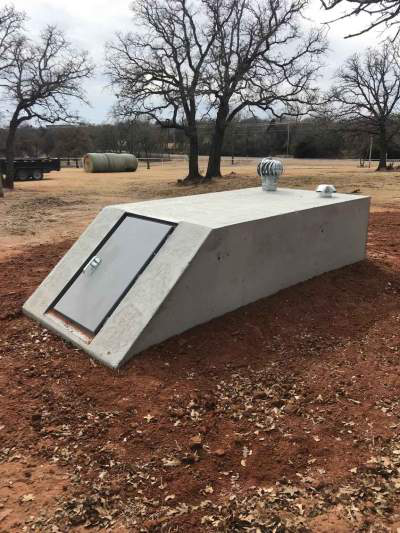
Outdoor Concrete Cellars
These are the classic “fraidy holes” modernized. They are usually installed in the backyard.
-
Pros: They can be much larger, holding up to 20 people in some models.
-
Cons: You have to run outside to get to them. In a Norman spring, “outside” often involves 70-mph straight-line winds and hail before the tornado even arrives.
Choosing Your Best Defense
When you weigh your options, accessibility is often the deciding factor. An above-ground safe room offers an effortless walk-in experience, making it the best choice for those with limited mobility. On the other hand, underground garage shelters require navigating stairs, which can be a moderate challenge during a high-stress event.
The impact of local soil is also a major differentiator. Safe rooms have a minimal relationship with the dirt since they sit on your slab. In contrast, underground units are directly affected by Norman’s heavy clay, which requires expert anchoring to prevent the unit from shifting or floating during a wet spring.
From a psychological perspective, many people find above-ground units less intimidating because they feel more like a standard room. Underground units provide the intense security of being earth-shielded, though they can feel more enclosed. Both options are fast to install, usually taking between three to six hours, and both offer elite protection against flying debris when built to FEMA standards.
What Does the National Weather Service Say?
The National Oceanic and Atmospheric Administration (NOAA), which has a massive presence right here in Norman, emphasizes that both above-ground and underground shelters provide near-total protection from tornadoes if they are built to FEMA P-361 standards.
The “best” shelter isn’t the one that goes the deepest; it’s the one you can get into the fastest. If you are 75 years old and your shelter is at the back of a rain-slicked yard, that shelter isn’t as safe for you as a walk-in unit in your garage.
The Cost of Waiting
In Oklahoma, we have a habit of joking about the weather until the sirens go off. We’ve all stood on the porch watching the clouds rotate. But as someone who has seen the aftermath of an EF5, I can tell you that the “it won’t happen to me” mindset is a dangerous gamble.
Norman has been hit before, and it will be hit again. The question is whether you want to spend those critical minutes in a panic or in a fortress.
Why Choose Oklahoma Shelters?
We are located right here in Oklahoma City and service the entire state, including every corner of Norman—from the busy streets near OU to the quieter neighborhoods out by Lake Thunderbird.
We understand the local permits required by the City of Norman. We know the specific engineering needed to keep a shelter stable in our clay. Most importantly, we are family-owned. We aren’t just selling you a product; we are neighbors ensuring your family survives the season.
How to Prepare for Your Installation
If you decide to move forward, the process is simpler than you might think.
-
Consultation: We look at your space and your soil.
-
Permitting: We help ensure everything is legal and registered with the city so first responders know where to look for you after a storm.
-
Installation: Most of our installs take less than a day. We clean up our mess, and you are left with a lifetime of security.
Common Myths About Oklahoma Shelters
Myth 1: “Above-ground shelters aren’t safe in an EF5.” This is false. A properly anchored safe room designed to FEMA standards is engineered to withstand the 250+ mph winds of an EF5. The steel and the anchors are stronger than the wind.
Myth 2: “Underground shelters always leak.” While Oklahoma clay is tough, a professionally installed steel or concrete shelter with high-quality sealants and epoxy coatings should remain dry. Maintenance is key—checking the seals once a year is a small price for peace of mind.
Myth 3: “I can’t afford a shelter.” Many Oklahomans don’t realize that there are often grants and low-interest financing options available. Additionally, adding a shelter to your Norman home almost always increases its resale value. It’s an investment in your property and your pulse.
Making the Call
Don’t let another storm season catch you looking for a place to hide under a mattress. Whether you want the walk-in convenience of a safe room or the traditional security of an underground bunker, we have the expertise to get it done right.
Every day you wait is a day you are vulnerable to the unpredictable nature of our plains. Let’s get your family protected before the next “hook echo” shows up on the radar.
Article Recap:
-
Soil Matters: Norman’s red clay is expansive; underground shelters need expert anchoring to prevent shifting.
-
Accessibility is Key: Above-ground safe rooms are best for those with mobility issues or pets.
-
Engineering: Both types are safe if they meet FEMA and ICC-500 standards.
-
Convenience: Garage floor shelters save space, while safe rooms provide easy walk-in access.
-
Value: A storm shelter is a tax-free home improvement that increases property value in Oklahoma.
Take Action Today
Ready to protect your home? Whether you’re in Norman, Moore, or anywhere in the great state of Oklahoma, we are here to help.
Visit our services page to see our full inventory.
For a free quote and soil assessment, email us at sales@oklahomashelters.net.