If you live in Oklahoma, the name “Moore” carries a heavy weight. It is a beautiful, thriving city sitting just south of Oklahoma City. But to the rest of the world, Moore is often synonymous with the most powerful forces nature can muster.
Living in Moore means living with a unique kind of resilience. Residents here have looked at the sky and seen things that most people only see in movies. From the historic 1999 twister to the devastating 2013 storm, Moore has become a central point in the study of meteorology.
At Oklahoma Shelters, we don’t just see these events as history. We see them as a reminder of why we do what we do. Our mission in Oklahoma City is to ensure that every family in Moore—and across the entire state—has a place to go when the sirens start to wail.
Let’s walk through the timeline of Moore’s tornado history and look at why this specific area seems to be a magnet for major storms.
Why Moore? The Geography of “Tornado Alley”
You might wonder why one city seems to get hit so much more often than its neighbors. Is there a target on Moore? Not exactly.
Meteorologists point to a few factors. Moore sits in a “sweet spot” where dry air from the Rockies meets warm, moist air from the Gulf of Mexico. This collision creates the perfect recipe for supercell thunderstorms.
Furthermore, the local topography plays a minor role. The way the land gently slopes and the urban heat island effect from the surrounding Oklahoma City metro can sometimes influence how a storm develops as it moves through the area.
May 3, 1999: The Bridge Creek-Moore Tornado
This is the storm that changed everything. On May 3, 1999, an F5 tornado tore through Moore with wind speeds that were literally off the charts.
A mobile Doppler radar unit recorded a wind speed of 301 mph near Bridge Creek. At the time, that was the highest wind speed ever recorded on Earth.
The Impact of 1999:
-
Destruction: Thousands of homes were completely leveled.
-
Casualties: 36 people lost their lives in the path of the storm.
-
Awareness: This storm proved that standard “interior rooms” weren’t always enough to survive a direct hit from an F5.
It was after this storm that many residents began looking seriously at types of storm shelters that could be installed directly into their garage floors or backyards.
May 8, 2003: Lightning Strikes Twice
Only four years after the 1999 disaster, Moore was hit again. An F4 tornado followed a path remarkably similar to the one that struck in 1999.
While this storm was slightly less powerful than its predecessor, it was still a major event. It destroyed hundreds of buildings and injured scores of people. However, there was a silver lining: there were zero fatalities in Moore from this storm.
Why? Because the community was prepared. People had installed shelters, practiced their drills, and stayed glued to the weather coverage. This proved that while we can’t stop the wind, we can certainly survive it.
May 20, 2013: The Newcastle-Moore EF5
Ten years after the 2003 storm, the unthinkable happened again. On May 20, 2013, an EF5 tornado with winds over 210 mph carved a 17-mile path of destruction through the heart of Moore.
This storm was particularly heartbreaking because it struck during the school day. Briarwood and Plaza Towers Elementary schools were in the direct path. The heroism of the teachers that day was incredible, but the loss of life, including several children, left a permanent scar on the community.
The Aftermath of 2013:
-
Economic Toll: Damage estimates topped $2 billion.
-
Building Codes: Moore became a leader in updating residential building codes to ensure homes are more wind-resistant.
-
Shelter Surge: The demand for high-quality, professional installation skyrocketed as families realized that “lucky” isn’t a safety plan.
According to the National Weather Service (NWS), the 2013 Moore tornado remains one of the most well-documented and studied weather events in history.
The Lessons Learned from Moore’s History
What has Moore taught us about survival? It has taught us that early warnings are only half of the equation. You also need a destination.
When a tornado is an EF4 or EF5, the “center of the house” is often the only thing left standing, and even then, it is rarely safe. In these high-intensity events, the only truly safe place is below ground or inside a reinforced steel structure engineered to withstand 250+ mph winds.
The Federal Emergency Management Agency (FEMA) provides strict guidelines for what constitutes a “Safe Room.” At Oklahoma Shelters, we ensure every unit we install meets or exceeds these FEMA 320 and ICC-500 standards.
Choosing the Right Protection for Your Family
Because every home and family is different, we offer several types of storm shelters. You don’t have to live in fear of the next May forecast.
Underground Garage Shelters
This is our most popular option. We cut a section out of your existing garage floor and drop in a steel or concrete unit.
-
Pros: It doesn’t take up any extra space. You can park your car right over it.
-
Safety: Being underground is the ultimate protection against flying debris.
Above-Ground Safe Rooms
For those with mobility issues or who feel claustrophobic underground, a steel safe room is a perfect choice.
-
Construction: Made of 1/4-inch thick plate steel with heavy-duty structural framing.
-
Installation: We bolt these directly to your concrete slab using industrial-grade anchors.
-
Security: These are tested against the same “missile impact” standards as underground units.
Outdoor Concrete Shelters
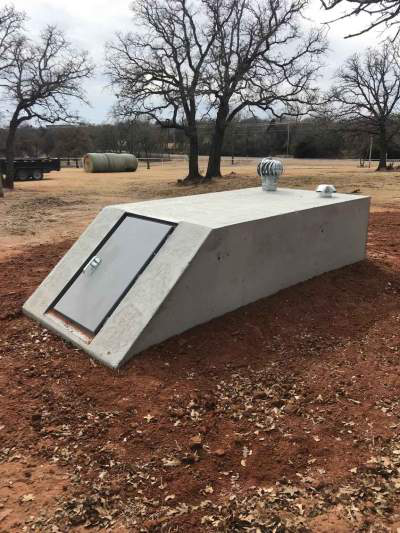
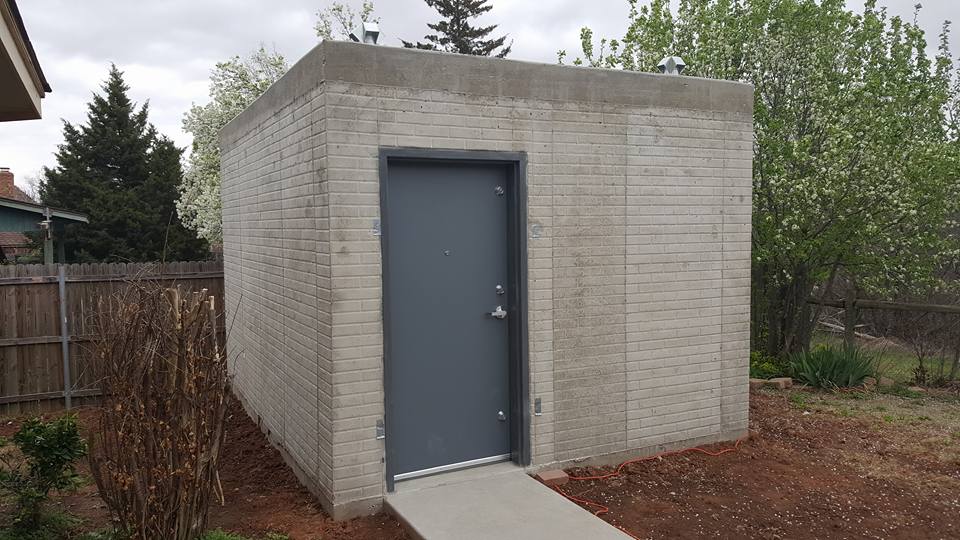
If you prefer to have your shelter away from the house, an outdoor slope-front or flat-top concrete shelter is a classic Oklahoma staple.
How Oklahoma Shelters Serves the Moore Community
We aren’t a national corporation that flies in when a storm hits. We are based in Oklahoma City and we are part of this community. We understand the soil, the climate, and the people.
When you visit Oklahoma Shelters, you are talking to experts who have seen the impact of these storms firsthand. We don’t use subcontractors for our installations. We use our own trained, certified teams. This ensures that when the “big one” comes, your shelter performs exactly the way it was engineered to.
Frequently Asked Questions About Moore Weather
Neighbors often ask us the same questions when they are considering a shelter. Here is what you need to know:
-
Is Moore more dangerous than other cities? Statistically, it has seen more high-end tornadoes in a short time. However, a tornado can hit anywhere in Oklahoma. Moore just happens to be a focal point of recent history.
-
Can a shelter really survive an EF5? Yes. FEMA-approved shelters are tested using a “cannon” that fires 15-pound 2x4s at 100 mph. This simulates the impact of debris in a 250 mph wind event.
-
Does a shelter add value to my home? Absolutely. In Oklahoma, a storm shelter is one of the top features buyers look for. It often pays for itself in resale value and peace of mind.
-
Will I get stuck if debris falls on the door? Our underground garage shelters feature a sliding door design. Even if a car or debris is on top, you can often still slide the door open. Most importantly, emergency crews in Moore and OKC keep a registry of shelter locations to find you after a storm.
The Resilience of Moore: Moving Forward
Despite the history, Moore is one of the fastest-growing cities in the state. People choose to live here because it is a fantastic community with great schools and a “can-do” spirit.
Living in Moore isn’t about being afraid; it’s about being smart. It’s about knowing that the weather is part of the landscape and preparing accordingly. It’s a city that has rebuilt better and stronger every single time.
Protect Your Family Before the Next Siren
History tells us that it isn’t a matter of if another storm will come, but when. You don’t want to be looking at the sky wishing you had made a phone call months ago.
At Oklahoma Shelters, we make the process easy. From the initial consultation to the final bolt, we handle everything. We offer free estimates and we can help you navigate any local grants or rebates that might be available for storm shelter installations.
Don’t let your family’s safety be a “maybe.” Let us give you a “definitely.”
Contact Oklahoma Shelters Today
Are you ready to give your family the peace of mind they deserve? We serve Moore, Oklahoma City, and every corner of this great state of Oklahoma. We are the highest-rated storm shelter company in Oklahoma for a reason: we care.
Visit us online or give us a call. Let’s make sure your family has a safe place to go when the next storm rolls through with a Storm Shelter from Oklahoma Shelters.