Living in Oklahoma: The Ultimate Guide to Surviving a Tornado
If you have spent any significant time in Oklahoma, you know the specific, heavy stillness that precedes a spring storm. It is a humid, expectant air that makes the hair on your arms stand up. As a lifelong Oklahoman, I’ve seen the sky turn that haunting shade of “bruised-plum” green more times than I can count. I’ve sat in dark closets with a transistor radio and walked through the debris of neighborhoods that looked like they had been put through a blender.
We live in a beautiful state, but our geography puts us in the crosshairs of nature’s most violent atmospheric events. According to NOAA, Oklahoma saw 149 tornadoes in 2019 alone. That isn’t just a statistic; it represents 149 moments of life-altering decisions. Survival here isn’t about luck. It is about a calculated, practiced response to a predictable threat.
In this guide, I want to share the hard-won wisdom of living in Tornado Alley. We will cover everything from the basic science of the storm to the structural engineering that keeps your family safe when the sirens start to wail.
Understanding the Beast: Why Oklahoma?
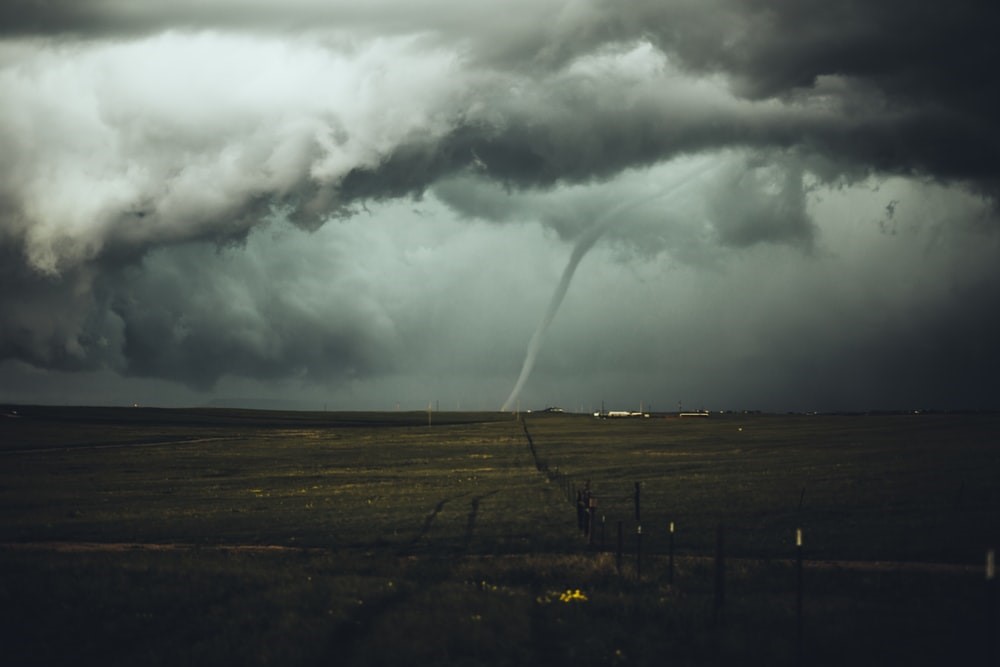
Why does the atmosphere seem to have a vendetta against the 405 and the 918? It comes down to a “collision of worlds.” Warm, moist air from the Gulf of Mexico travels north unimpeded until it hits the cold, dry air sweeping down from the Rockies. When these air masses clash over our flat red dirt, the energy released is astronomical.
This unique geography creates what we call “Tornado Alley.” While technology has improved our warning times significantly—giving us an average of 13 to 15 minutes of lead time—the sheer power of these storms remains humbled. To live here comfortably, you must transition from a mindset of “if it happens” to “when it happens.”
Decoding the Language of the Skies
Have you ever found yourself confused by the weather terminology on the local news? Meteorologists often use shorthand that can be confusing when your adrenaline is spiking. Understanding the difference between a “Watch” and a “Warning” is the first step in your survival plan.
The Taco Analogy
A popular and effective way to remember this is the “Taco Analogy”:
-
Tornado Watch: This means we have all the ingredients for a taco—the meat, the cheese, the shell—sitting on the counter. The ingredients are there, but the taco hasn’t been made yet. Stay alert.
-
Tornado Warning: This means the taco is actually being made, or it’s already on the plate. A tornado has been spotted or indicated by radar. Take cover immediately.
Beyond the Basics: PDS and Emergencies
Occasionally, you might hear the phrase “Particularly Dangerous Situation” (PDS) or “Tornado Emergency.” * PDS: This is reserved for rare situations where there is a high confidence in long-track, violent tornadoes.
-
Tornado Emergency: This is the highest level of alert. It means a large, violent tornado is currently moving into a highly populated area. There is no time to pack; you must be in your shelter.
The Foundation of Survival: Your Emergency Kit
You cannot wait for the sirens to start before you begin gathering your supplies. In the chaos of a power outage or a structural strike, you need a “Go-Bag” that is already sitting in your safe room or shelter.
What should be in this kit? Think of it as your 72-hour survival pod.
The Essential Checklist:
-
Hydration and Nutrition: One gallon of water per person per day. High-protein, non-perishable snacks like beef jerky or protein bars.
-
Communication: A battery-powered or hand-crank NOAA Weather Radio. Cell towers often fail or become congested during outbreaks.
-
Light: LED flashlights and headlamps (headlamps are better as they keep your hands free).
-
First Aid: A comprehensive kit including any daily prescriptions, asthma inhalers, and basic trauma supplies.
-
Protection: This is often overlooked—helmets. Whether it’s a bicycle helmet or a hard hat, head protection is the #1 way to prevent fatalities from flying debris.
-
Footwear: Sturdy, closed-toe shoes. If your house is damaged, walking through the wreckage in flip-flops or bare feet is a recipe for serious injury.
-
Documentation: Waterproof bags containing copies of insurance policies, IDs, and a small amount of cash.
Strategic Action: Where to Go When the Wind Rises
Where you are when a warning is issued determines your survival strategy. Not every building is created equal, and some common “survival” myths can actually be deadly.
If You Are at Home
The goal is to put as many walls between you and the outside as possible.
-
The Golden Rule: Get to the lowest floor.
-
Interior Rooms: A small, windowless interior room like a bathroom, closet, or hallway is your best bet.
-
Avoid Windows: Glass becomes shrapnel. Never open your windows to “equalize pressure”—this is a myth that actually allows the wind to enter your home and lift the roof off more easily.
If You Are in a Vehicle or Mobile Home
Let me be blunt: A mobile home is not safe. Even if it is tied down, the structural integrity cannot withstand the lift generated by even a weak tornado.
-
If you live in a mobile home, have a pre-arranged plan to go to a neighbor’s site-built house or a community shelter the moment a Watch is issued.
-
In a car: Do not try to outrun the storm. If you are caught on the road, find a sturdy building nearby. If no building is available, stay in the car with your seatbelt on, put your head below the windows, and cover it with your hands or a blanket.
-
The Overpass Myth: Never seek shelter under a highway overpass. These structures create a “wind tunnel” effect, increasing wind speeds and making you a target for debris.
Why a Dedicated Storm Shelter is the Gold Standard
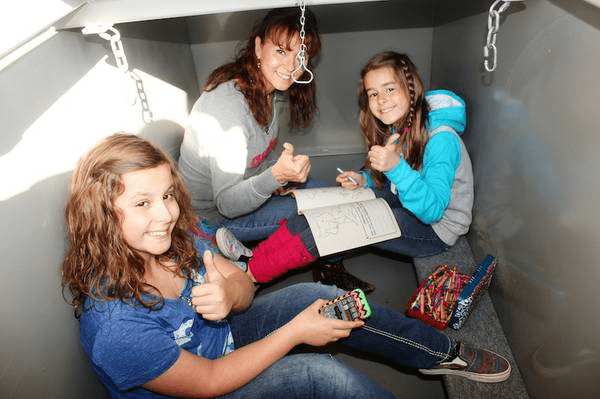
While interior closets have saved lives, an EF4 or EF5 tornado can leave nothing behind but a clean concrete slab. In those extreme cases, the only guaranteed survival comes from a dedicated, FEMA-rated storm shelter.
As a homeowner in Oklahoma, choosing the right shelter is the most significant investment you can make in your family’s safety. At Oklahoma Shelters, we’ve spent over seven years perfecting the installation of these life-saving structures.
Types of Shelters to Consider:
-
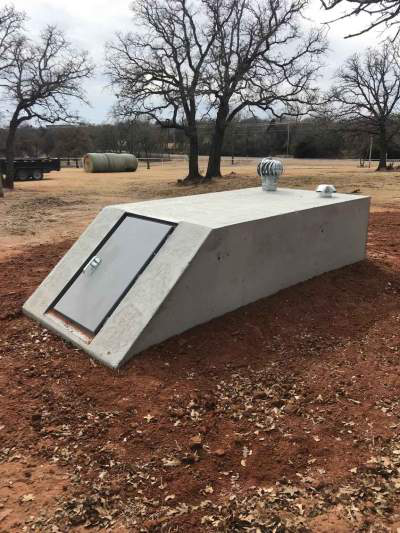
Underground Garage Shelters: These are incredibly popular because they don’t take up extra square footage. We cut into your garage floor and install a steel unit that sits flush with the ground. You can still park your car over it.
-
Concrete Storm Cellars: The classic “tornado cellar” usually located in the backyard. These are robust and can accommodate larger families or even small neighborhood groups.
-
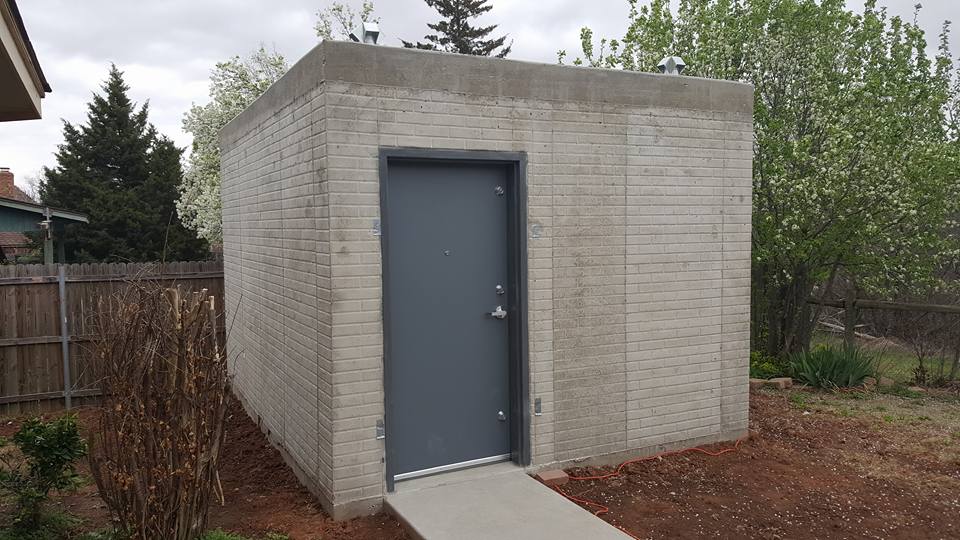
Above-Ground Safe Rooms: Modern engineering has made these just as safe as underground options. Constructed of heavy-duty steel and anchored to a reinforced concrete slab, these are ideal for people with mobility issues who cannot navigate stairs during a crisis.
The Psychological Game: Staying Calm Under Pressure
Preparation isn’t just about physical gear; it’s about mental readiness. When the sky turns that eerie green and the sirens start their mechanical wail, your brain will naturally want to panic.
How do you stay sharp?
-
Drill regularly: Take the kids to the shelter once a month during the off-season. Make it a game. If they know exactly where their “storm shoes” and “storm helmets” are, they won’t panic when it’s for real.
-
Trust the experts: Turn on the local news. Oklahoma has the best meteorologists in the world. They will give you street-by-street information.
-
Limit “Doom-Scrolling”: Constant updates can increase anxiety. Stick to one or two trusted sources.
Life After the Storm: The Recovery Phase
Once the “all-clear” is given, the danger hasn’t entirely passed. The minutes and hours following a strike are high-risk periods for secondary injuries.
-
Check for Gas Leaks: If you smell gas or hear a hissing sound, get everyone away from the house immediately and call the utility company.
-
Watch for Downed Lines: In Oklahoma, “live” wires can be hidden under debris or in puddles. Treat every wire as if it is energized.
-
The Community Bond: This is where Oklahoma shines. We are a people of “the neighborly check.” Once you know your family is safe, check on those around you.
Frequently Asked Questions
Q: Do I need to open my windows during a tornado? A: Absolutely not. This is an old myth. Opening windows allows the wind to enter the home, increasing the internal pressure and making it more likely that your roof will be lifted off. Keep them closed and stay away from them.
Q: Are public shelters available in Oklahoma City? A: Most cities in Oklahoma no longer provide public shelters due to liability and safety concerns. Residents are encouraged to have their own home shelters or a “shelter-in-place” agreement with a neighbor.
Q: How long should I stay in my shelter? A: Wait until the National Weather Service officially expires the warning for your specific area. Tornadoes can be “cyclic,” meaning one storm can produce multiple tornadoes in a row.
Resilience is the Oklahoma Way
Living in Oklahoma means respecting the wind. We don’t live in a state of fear, but a state of readiness. By understanding the science, preparing your kit, and investing in a high-quality shelter, you take the power away from the storm.
We at Oklahoma Shelters are dedicated to making sure your family is still here to see the sunrise the morning after a storm. We don’t use subcontractors; our experienced team handles every installation to ensure it meets the highest FEMA guidelines.
Take the first step toward peace of mind today.
Whether you are looking for an underground garage unit, a concrete cellar, or a steel safe room, we are here to help you navigate the options. Don’t wait for the next “high-risk” day to realize you aren’t prepared.
-
Email us for a free quote: sales@oklahomashelters.net
-
Call for a consultation: 405-367-7901
-
Protect your family. Because in Oklahoma, it’s not a matter of if, but when.