Prioritizing Storm Safety in Oklahoma
Living in Oklahoma means understanding the power of nature. Tornadoes are a reality of life in the plains. For most homeowners, a storm shelter is the most important safety feature of the property. However, many people assume that once a shelter is installed, it remains safe forever.
Storm shelters are subject to environmental stress. Ground movement, moisture, and time can all take a toll on the structural integrity of your refuge. Knowing when to repair or replace your shelter is critical for your family’s safety.
Oklahoma Shelters is committed to ensuring every resident has a reliable place to go when the sirens sound. Here is how to determine if your current storm shelter is still up to the task.
The Importance of Annual Inspections
You should not wait for a tornado warning to check the condition of your shelter. Annual inspections are the ideal way to maintain your safety equipment.
The best time for an inspection is before the peak storm season begins. In Oklahoma, ground movement is common due to changing moisture levels in the soil. This shifting can cause cracks or misalignments in underground units. Major storms can also put sudden pressure on a shelter. After any significant weather event or period of heavy rain, a quick check-up is a smart safety move.
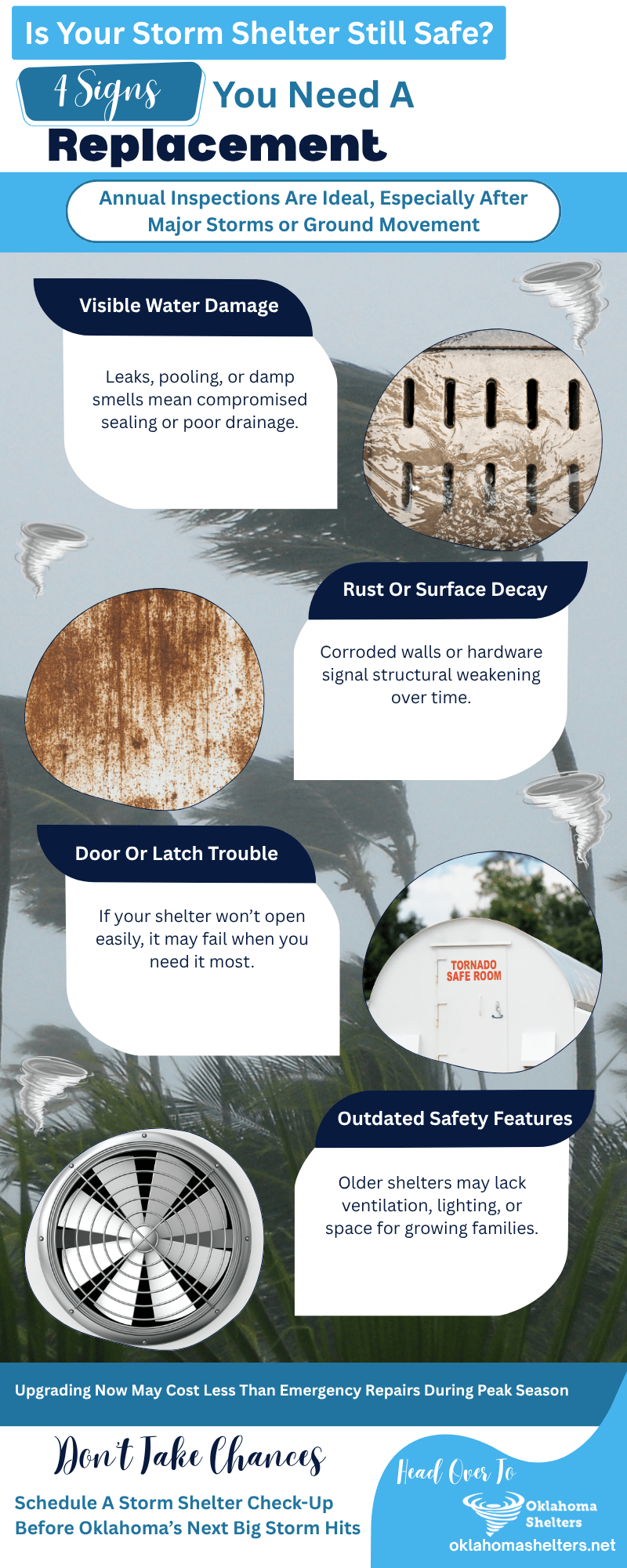
1. Visible Water Damage
Water is one of the biggest threats to a storm shelter’s longevity. Whether you have an underground concrete “root cellar” style shelter or a modern steel unit, moisture must stay out.
Signs of Compromised Sealing
If you notice leaks, pooling water on the floor, or a persistent damp smell, your shelter is compromised. These issues usually stem from:
-
Poor Drainage: If the yard around your shelter doesn’t slope away properly, water will collect against the walls.
-
Failed Seals: Over time, the sealant used around doors and vents can crack and let in moisture.
-
Concrete Porosity: Older concrete shelters can develop hairline fractures that allow groundwater to seep through.
Water damage isn’t just a nuisance. It can lead to mold growth, which creates a health hazard in a confined space. More importantly, consistent water exposure can weaken the very structure meant to protect you.
2. Rust and Surface Decay
For steel shelters, rust is the primary enemy. While modern shelters use high-quality coatings to prevent corrosion, older units may not be as well-protected.
Why Corrosion Matters
Corroded walls or hardware are more than just an eyesore. Rust eats away at the metal, signaling structural weakening over time. A shelter that has significant rust may not be able to withstand the extreme pressure changes or debris impacts of an EF4 or EF5 tornado.
Pay close attention to the areas where the shelter meets the ground. Check the corners and the base of the walls. If the metal feels thin or flaky, the structural integrity is likely gone. In these cases, a replacement is often safer and more cost-effective than trying to patch a failing unit.
3. Door or Latch Trouble
In an emergency, every second counts. Your storm shelter door must operate perfectly every single time.
Common Door Issues
If your shelter door won’t open easily or the latch feels stuck, it may fail you when you need it most. Common problems include:
-
Warping: Extreme heat and cold can cause metal or wood components to warp.
-
Hinge Decay: Rust or debris can seize up the hinges.
-
Pressure Issues: If the shelter has shifted in the ground, the door frame may no longer be square, making it difficult to lock.
A door that is hard to open from the inside is a major entrapment risk. If you have to struggle with the handle, it is time to call a professional for a check-up or a total unit upgrade.
4. Outdated Safety Features
The science of tornado safety has evolved significantly over the last twenty years. If your shelter was installed decades ago, it might be lacking modern safety standards.
Modern Improvements
Older shelters often lack the following essential features:
-
Advanced Ventilation: Newer designs ensure a constant flow of fresh air even if the main door is obstructed.
-
Battery-Powered Lighting: Integrated lighting systems are now standard, ensuring you aren’t stuck in total darkness during a power outage.
-
Impact Testing: Modern shelters are tested at places like the Wind Science and Engineering Research Center at Texas Tech University. Older units may not meet current FEMA P-361 standards for debris impact.
-
Space Requirements: As families grow, an older, smaller shelter may become cramped and unsafe.
Upgrading to a modern Tornado Safe Room provides peace of mind that your shelter meets the most recent national safety guidelines.
Why Upgrading Now Saves Money
It is a common mistake to delay shelter repairs until the spring. However, waiting until peak storm season can be a mistake.
Demand for shelter technicians and installers skyrockets during the spring months. Upgrading your shelter now may cost significantly less than seeking emergency repairs during the peak season. By addressing these 4 signs of wear today, you avoid the “rush” and ensure your family is protected before the next weather alert is issued.
Don’t Take Chances with Your Safety
A storm shelter is a life-saving investment. If you have noticed any of the warning signs—water, rust, door trouble, or outdated features—it is time to act. Don’t wait for the clouds to turn green to wonder if your shelter is safe.
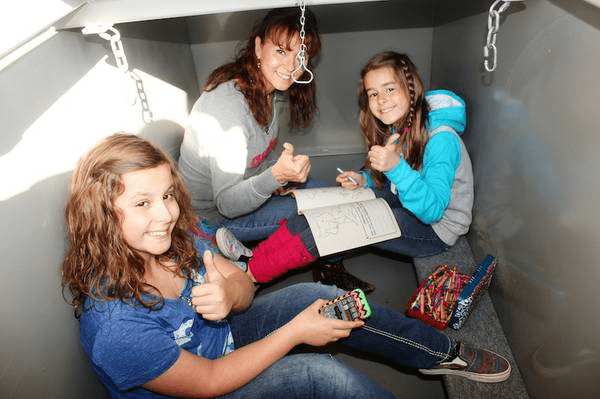
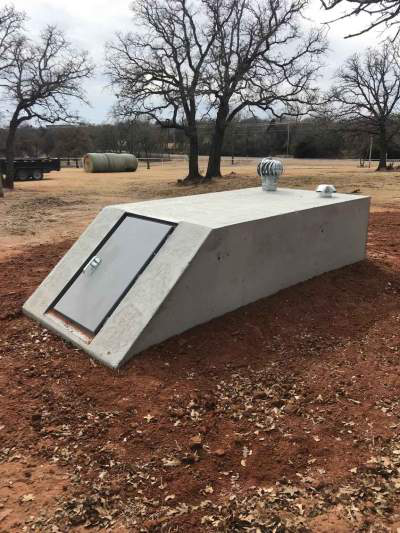
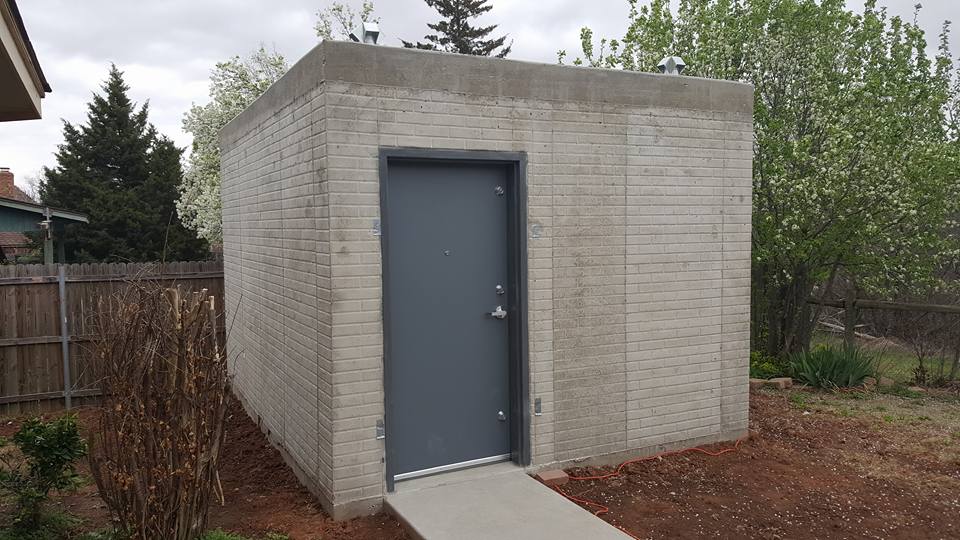
Oklahoma Shelters is here to help you evaluate your current setup. We offer high-quality replacement options, including above-ground safe rooms and underground shelters that meet the highest safety standards.
Head over to Oklahoma Shelters to learn more about our services and view our latest safety-rated models.