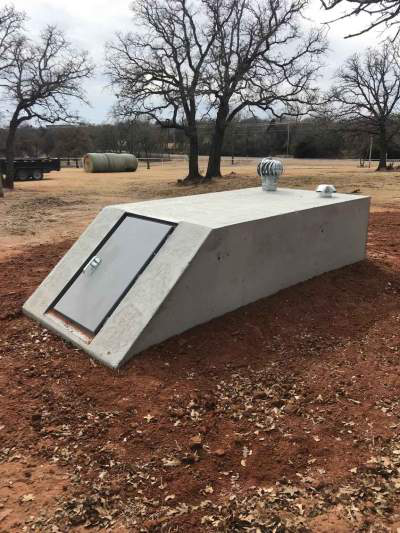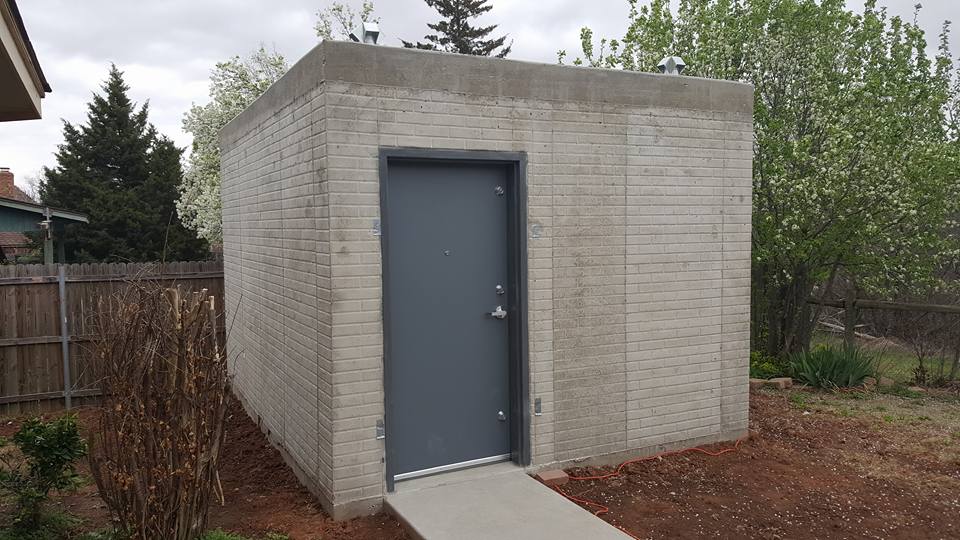
Storm shelters aren’t an abstract safety upgrade in Oklahoma. They’re a response to real weather patterns, local soil conditions, and warning times that don’t leave much room for error.
For homeowners considering in– ground storm shelters in Oklahoma, the decision usually comes down to a few practical questions: Will it hold up under pressure? Will it stay accessible? And will it work the way it’s supposed to when conditions are at their worst?
This guide walks through what actually matters when choosing a concrete tornado shelter—from construction and installation to drainage, costs, and common mistakes to avoid.
Why In-Ground Storm Shelters Are Common in Oklahoma
In-ground storm shelters are widely used in Oklahoma because the surrounding soil adds stability and protection from wind-driven debris. When installed correctly, a concrete tornado shelter is designed to stay anchored no matter how intense the storm.
Construction Materials and Structural Design
Most storm shelters use reinforced concrete because it holds up well under soil pressure and debris impact. But material alone isn’t enough. Design details—like wall thickness, reinforcement spacing, and the entry—play just as big a role in how a storm shelter performs during severe weather.
Installation Methods for In-Ground Storm Shelters
Installing in-ground storm shelters in Oklahoma involves more than excavation. The process includes base preparation, precise placement, anchoring, and controlled backfill to prevent shifting or voids over time.
Drainage and Moisture Control
Drainage planning is critical for in-ground storm shelters in Oklahoma. Without proper moisture control, even a well-built concrete storm shelter can develop standing water.
Over time, this increases pressure on the structure, accelerates corrosion of metal components, damages seals, and encourages mold growth that affects air quality.
Effective installations account for groundwater levels, soil grading, and how water moves around the shelter to reduce long-term moisture buildup and structural stress.
Pitfalls to Avoid When Choosing In-Ground Storm Shelters
- Skipping site evaluation:Soil, slope, and drainage directly affect performance.
- Rushing installation:Speed can compromise anchoring and long-term reliability.
- Ignoring safety ratings:Shelters without verified standards may not hold up under extreme conditions.
- Treating it as an add-on:The most reliable storm shelters are planned with the property, not added later.
Permits and Local Requirements
Make sure state and local permit requirements are followed, especially for in-ground storm shelters installed near existing structures.

Considering Options for Oklahoma Storm Shelters
Homeowners considering in-ground storm shelters in Oklahoma can reach out to our team at Oklahoma Shelters. We offer different types of storm shelters, each designed for your situation. Reach out to us to learn your options and get a customized shelter for your house in no time.