The Critical Importance of Storm Shelters in Hospitals and Healthcare Facilities
In an environment dedicated to healing and saving lives, safety is the ultimate priority. For hospitals located in storm-prone regions like Oklahoma, the threat of severe weather—including tornadoes and high-velocity straight-line winds—presents a unique set of challenges. Unlike office buildings or retail spaces, hospitals house vulnerable populations who cannot simply “run for cover.”
The implementation of a professional, high-capacity storm shelter in a hospital setting is not just a building requirement; it is a foundational component of modern healthcare infrastructure. This article explores why a designated haven is essential for patient safety, staff protection, and the maintenance of life-saving medical care.
Patient and Staff Safety: The Primary Mission
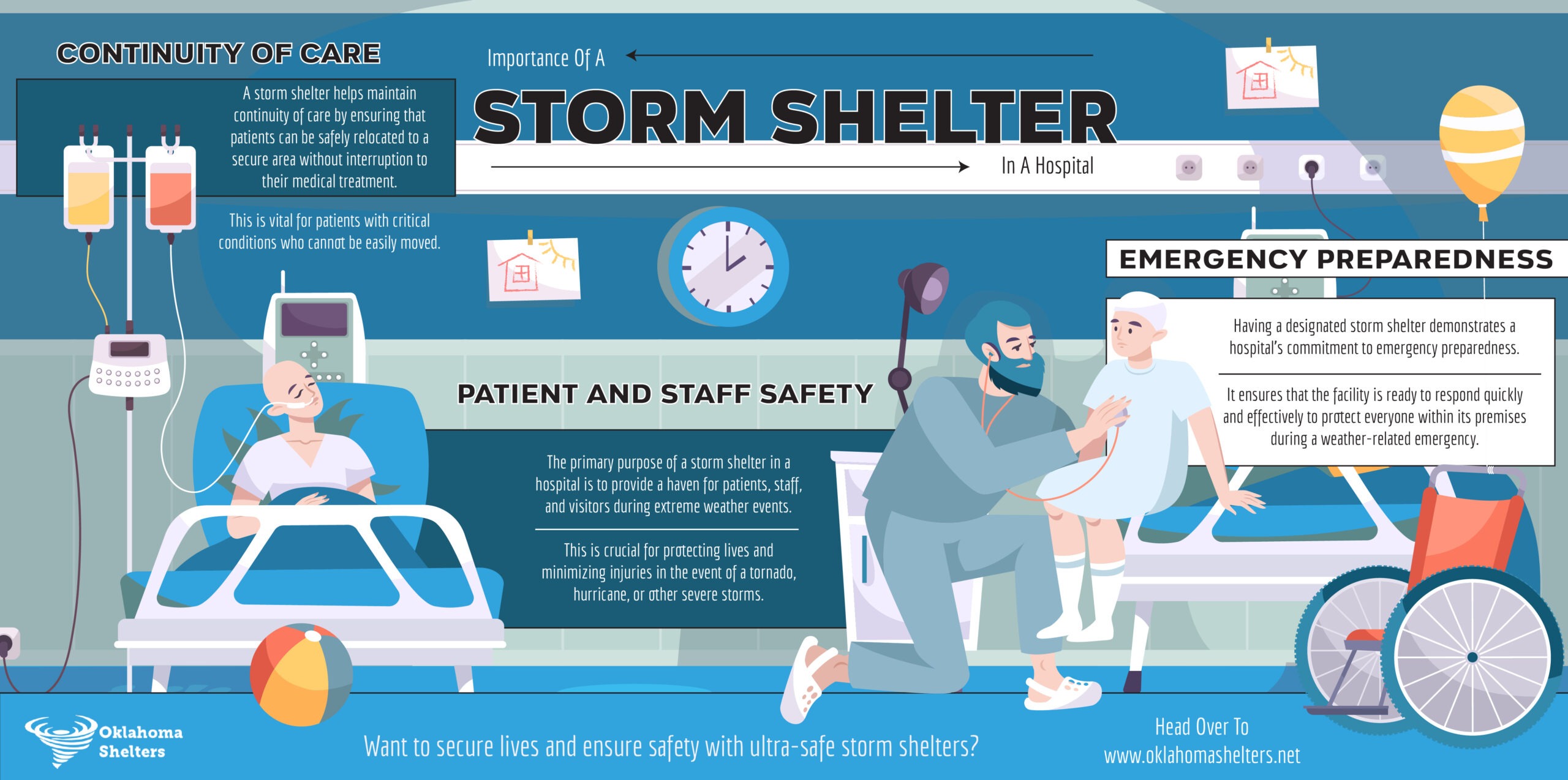
The primary purpose of a storm shelter in a hospital is to provide a haven for patients, staff, and visitors during extreme weather events. In the event of a tornado or hurricane, the structural integrity of a standard hospital wing can be compromised by flying debris or extreme atmospheric pressure changes.
Protecting Vulnerable Populations
Hospitals serve individuals with varying levels of mobility. Many patients are confined to beds, attached to life-support machines, or recovering from surgery. These individuals cannot quickly evacuate a building. A storm shelter provides a fortified, “near-absolute” protection zone where these patients can be shielded from the physical dangers of a storm without the need for a chaotic external evacuation.
Safeguarding Essential Personnel
Staff safety is equally critical. Doctors, nurses, and technicians are the backbone of any medical response. If medical personnel are injured during a storm, the hospital’s ability to treat victims in the aftermath is severely diminished. By providing a secure area for staff, the hospital ensures that its human resources remain intact and ready to provide care once the immediate danger has passed.
Continuity of Care: Uninterrupted Medical Treatment
A major challenge during a weather emergency is the potential for medical errors or equipment failure during a transition. A storm shelter helps maintain continuity of care by ensuring that patients can be safely relocated to a secure area without interruption to their medical treatment.
Critical Condition Management
For patients with critical conditions who cannot be easily moved, the presence of an on-site, easily accessible shelter is vital. Modern hospital storm shelters are engineered to accommodate:
-
Life Support Systems: Providing enough space and power backup for ventilators and monitors.
-
Medical Gas Lines: Ensuring that oxygen and other essential gases are available within the safe zone.
-
Emergency Power: Maintaining climate control and lighting to prevent patient distress.
When a shelter is integrated into the hospital’s architecture, the transition from a standard room to a safe zone can be handled with surgical precision, minimizing the physiological stress on the patient.
Demonstrating a Commitment to Emergency Preparedness
Having a designated storm shelter demonstrates a hospital’s commitment to emergency preparedness. In the healthcare industry, reputation is built on trust. Patients and their families need to know that they are in a facility that has planned for the worst-case scenario.
Rapid Response and Effective Execution
It ensures that the facility is ready to respond quickly and effectively to protect everyone within its premises during a weather-related emergency. Preparedness involves more than just having a safe room; it includes:
-
Staff Training: Conducting regular drills to move patients efficiently.
-
Clear Signage: Ensuring that visitors and mobile patients can find the shelter without assistance.
-
Resource Management: Keeping the shelter stocked with emergency medical supplies, water, and communication tools.
A hospital that is “Storm Ready” reduces panic during an actual event. When the sirens sound, a well-prepared facility operates with calm efficiency, which is essential for minimizing injuries and psychological trauma.
Structural Requirements for Healthcare Shelters
Hospital storm shelters must meet much higher standards than residential units. Because they must often accommodate heavy medical equipment and dozens (or hundreds) of people, the engineering is complex.
FEMA P-361 and ICC 500 Compliance
Any hospital shelter must meet strict federal guidelines. This includes resisting the impact of high-speed debris. In a tornado, objects like vehicles or structural beams can become missiles. Hospital shelters utilize reinforced concrete and heavy-duty steel to ensure that even a direct hit from a large object will not breach the safe zone.
Accessibility and Capacity
Hospitals must account for “surge capacity.” During a storm, the number of people in the building may increase as visitors or people from the surrounding community seek safety. The shelter must be designed with wide entryways to allow for the passage of hospital beds, gurneys, and wheelchairs, ensuring that no one is left behind due to physical barriers.
The Economic Impact of Hospital Safety
While the initial investment in a large-scale storm shelter is significant, the long-term economic benefits are clear.
-
Liability Reduction: Hospitals have a legal and ethical duty of care. Providing a certified safe zone significantly reduces the risk of lawsuits and insurance claims related to weather-related injuries.
-
Asset Protection: By protecting patients and staff, the hospital avoids the massive costs associated with medical malpractice or the loss of highly trained personnel.
-
Operational Resilience: A hospital that remains functional after a storm can continue to generate revenue and serve as a “beacon” for the community, which is essential for disaster recovery funding and grants.
Why Choose Oklahoma Shelters for Your Facility?
Oklahoma is at the heart of “Tornado Alley.” We understand the sheer power of nature better than anyone. At Oklahoma Shelters, we specialize in providing ultra-safe, engineered solutions for large-scale facilities, including hospitals, clinics, and nursing homes.
Our shelters are designed with the latest in safety technology, ensuring that your facility can maintain its mission of care even in the face of an EF5 tornado. We provide custom consultations to help you determine the best location, size, and type of shelter to fit your hospital’s unique layout.
Secure Lives with Proven Engineering
Don’t wait for a storm to expose the vulnerabilities in your emergency plan. Secure the lives of your patients and staff with a solution that is built to endure.
Want to secure lives and ensure safety with ultra-safe storm shelters?