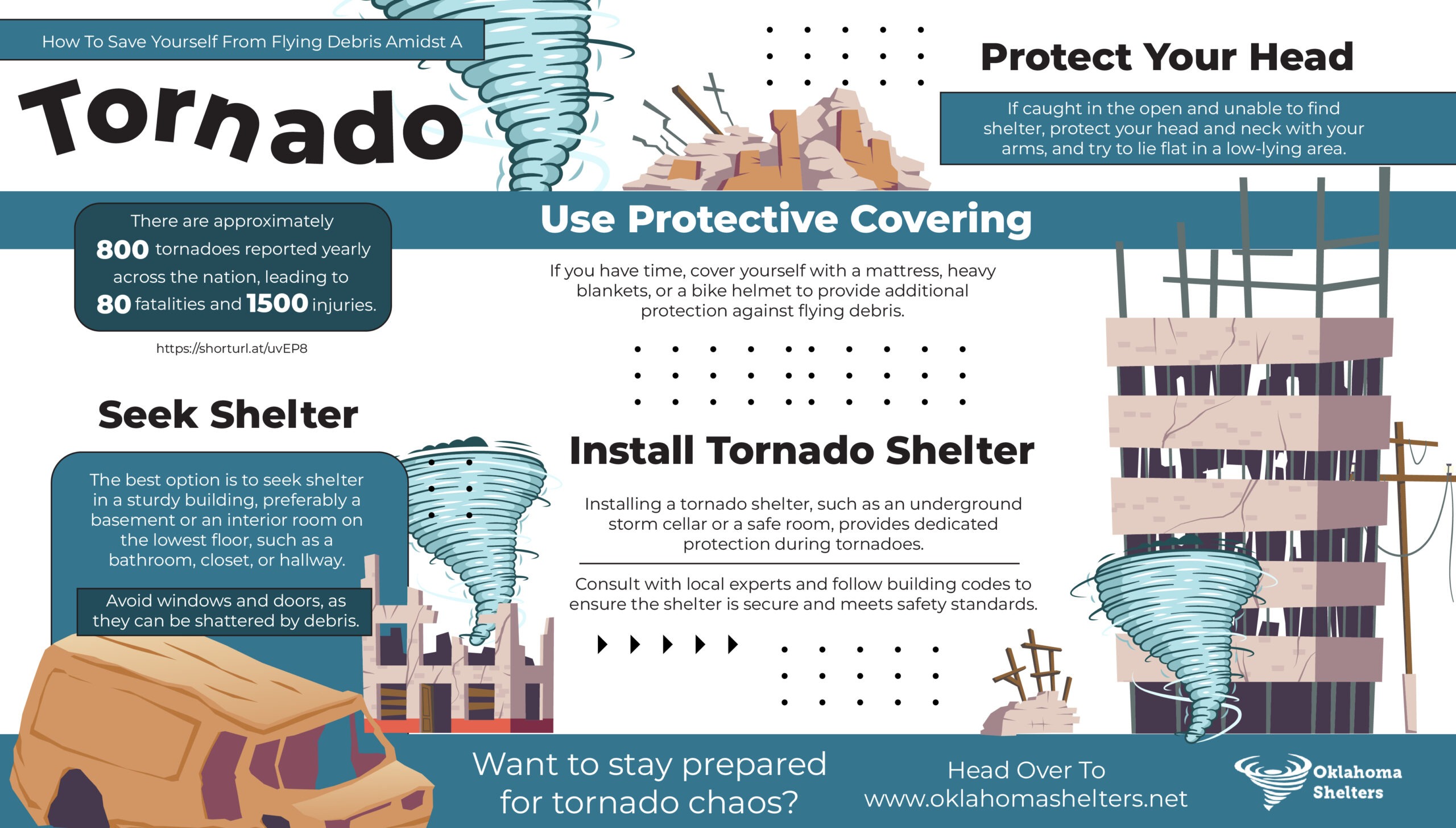
Tornadoes are among the most violent atmospheric phenomena on Earth. Across the United States, approximately 800 tornadoes are reported every year. These storms are responsible for an average of 80 fatalities and over 1,500 injuries annually. In Oklahoma, the risk is even more concentrated due to our location in the heart of Tornado Alley.
When a tornado strikes, the primary cause of injury and death is not the wind itself, but the flying debris. High-velocity winds can turn common household objects, tree limbs, and construction materials into lethal projectiles. Knowing how to protect yourself from these hazards is essential for survival.
At Oklahoma Shelters, we advocate for proactive safety. This guide outlines the most effective strategies to shield yourself and your family from flying debris during a severe weather event.
1. Seek Immediate Shelter in a Sturdy Building
The most effective way to survive a tornado is to put as many barriers as possible between yourself and the outside world. Your choice of location is the single most important factor in your survival.
The Best Locations for Protection
If you are at home or in a public building, move immediately to a sturdy structure.
-
Basements: An underground basement is the safest place in a standard home. The surrounding earth protects you from horizontal debris.
-
Interior Rooms: If no basement is available, go to the lowest floor. Choose a small interior room such as a bathroom, closet, or hallway.
-
Avoid Windows and Doors: Glass is the first thing to fail during a storm. Shattered glass becomes a dangerous cloud of shrapnel. Stay away from any openings that lead to the exterior.
2. Use Protective Covering to Shield Your Body
If you have a few minutes of lead time before the storm hits, gather materials to provide extra cushioning against impact. Flying debris can penetrate walls, and having an additional layer of protection can prevent traumatic injuries.
Essential Survival Materials
-
Mattresses: If you are in a bedroom, dragging a mattress over your body can shield you from falling heavy objects or large pieces of debris.
-
Heavy Blankets and Sleeping Bags: These offer a layer of padding that can catch smaller fragments of glass or wood.
-
Helmets: One of the most effective safety hacks is wearing a helmet. Whether it is a bicycle helmet, a motorcycle helmet, or a hard hat, protecting your skull from blunt-force trauma significantly increases your chances of survival.
3. The “Last Resort” Strategy: Protect Your Head and Neck
If you are caught in the open and are unable to find a sturdy building, you must act quickly. Being outdoors during a tornado is extremely dangerous, but specific body positioning can help.
Lie Flat in a Low-Lying Area
Find a ditch, ravine, or a low-lying patch of ground away from trees and vehicles.
-
Lie Flat: Press your body as close to the ground as possible. This minimizes the surface area exposed to high winds.
-
Protect Your Head: Use your arms to cover your head and neck. These are the most vulnerable parts of your body.
-
Stay Away from Overpasses: Contrary to popular myths, highway overpasses are not safe. They can act as a wind tunnel, increasing the speed of debris and making it more likely that you will be blown away.
4. Install a Dedicated Tornado Shelter
While interior rooms provide some protection, they are not designed to withstand EF4 or EF5 tornadoes. To ensure “near-absolute” protection, homeowners should consider installing a dedicated storm shelter.
Why Professional Shelters Are Superior
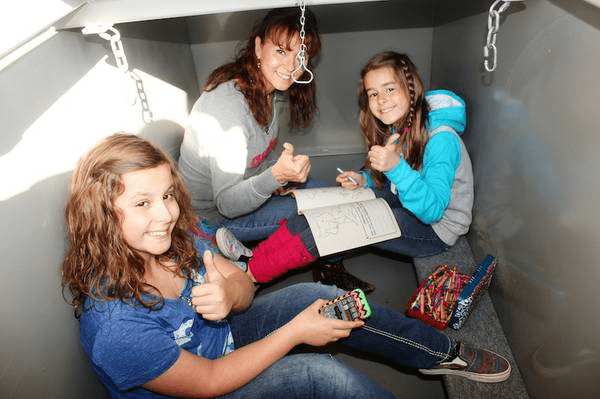
A professional tornado shelter is engineered to handle extreme wind loads and debris impacts that a standard house cannot.
-
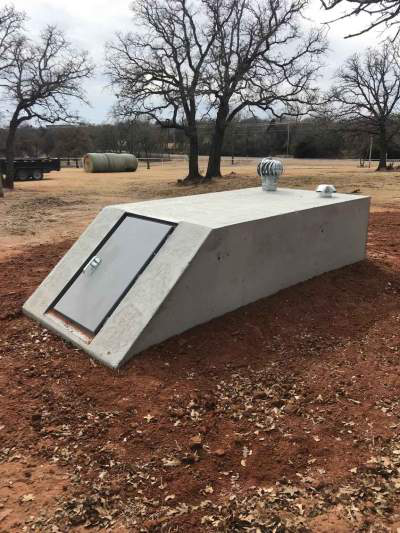
Underground Storm Cellars: These utilize the earth as a shield. They are nearly impossible for a tornado to destroy.
-
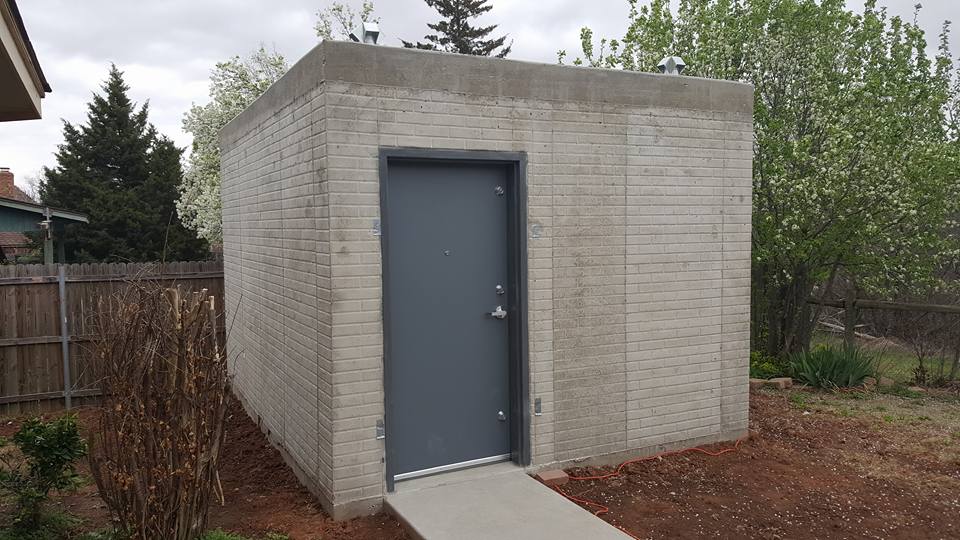
Above-Ground Safe Rooms: These are reinforced steel or concrete rooms anchored to your home’s foundation. They are tested at high speeds to ensure they are debris-resistant.
Consultation and Compliance
When installing a shelter, it is vital to consult with local experts. A shelter must meet FEMA P-320 safety standards and local building codes to ensure it is secure. At Oklahoma Shelters, we provide units that are rigorously tested to keep you safe during the most chaotic storms.
5. Preparing Your Emergency Debris Kit
Preparation should happen long before the clouds turn dark. Your storm shelter or “safe room” should be equipped with items that help you deal with the aftermath of flying debris.
Recommended Safety Gear
-
Sturdy Shoes: After a tornado, the ground will be covered in nails, glass, and splinters. Keep a pair of boots in your shelter.
-
Gloves: Heavy-duty work gloves are necessary for moving debris if you become trapped.
-
Whistle: If you are trapped under debris, a whistle is much more effective than yelling to alert rescuers to your location.
-
First-Aid Kit: Ensure your kit contains supplies for treating deep cuts and puncture wounds, which are common during debris-heavy storms.
6. Understanding the Stats: Why We Prepare
The statistic of 800 tornadoes per year is a sobering reminder of why we live “weather-aware” in Oklahoma. While 80 fatalities might seem low compared to the number of storms, it is important to remember that most of those deaths occur because victims were struck by debris or were in structures that could not withstand the wind.
By following the “Seek Shelter” and “Protect Your Head” protocols, you can drastically reduce the risk of becoming part of those statistics. Community preparedness and the installation of high-quality shelters have already contributed to a downward trend in fatalities over the last several decades.
Take Control of Your Safety
Flying debris is a “chaos factor” during a tornado. You cannot control what the wind picks up, but you can control where you are standing when it happens. Whether it is moving to an interior room, using a mattress for cover, or investing in a permanent underground cellar, every step you take adds a layer of safety.
Want to stay prepared for tornado chaos? Don’t wait until the sirens start to sound. Professional protection is the only way to guarantee your family’s safety against the strongest winds on the planet.
Contact Oklahoma Shelters Today
Oklahoma Shelters: Your Safety is Our Top Priority.