Finding Your Fortress: Ordering the Best Garage Shelter
Spring in Oklahoma is a beautiful season until the sky turns that specific, bruised shade of green. If you have spent enough time in the 405 or the 918, you know exactly what I am talking about. You hear the local meteorologist start talking about “the dryline” and “discrete supercells,” and suddenly, your hallway doesn’t feel safe enough anymore. I have sat in those hallways with a mattress over my head, and let me tell you, there is a better way to live.
Ordering a garage storm shelter is one of the most significant decisions you will make for your home. It is not just about home improvement. It is about peace of mind. When the sirens wail, you want to know that your family is three steps away from a fortified sanctuary. But how do you choose the right one? How do you make sure it fits?
This guide is built on years of Oklahoma experience. We will walk through the selection, measurement, and ordering process to ensure your home is ready for whatever the atmosphere decides to throw at it.
Why the Garage is the Ideal Location
Most Oklahomans choose the garage for their shelter for one primary reason: convenience. During a “tornado emergency,” every second is a commodity you cannot afford to waste.
Protection from the Elements
If your shelter is in the backyard, you have to run through heavy rain, high winds, and potentially large hail to get to it. In a garage, you simply step out of your kitchen or mudroom and you are there. You stay dry, and more importantly, you stay safe from falling debris or flying ice.
Saving Your Real Estate
A garage shelter, specifically an underground model, takes up zero square footage. Once it is installed, it sits flush with the concrete. You can park your car right over the top of it. For homeowners who value their yard space or live in neighborhoods with strict HOA guidelines, this is the gold standard for storm protection.
Evaluating Your Family’s Specific Needs
Before you look at a single brochure, you need to look at your family. A shelter that works for a young couple won’t work for a family of six with two Golden Retrievers.
Capacity Matters
How many people are actually in your house on a typical Tuesday night? We offer various sizes, usually ranging from 6-person units up to larger community-sized bunkers.
-
Think about guests. Do you often have neighbors or extended family over?
-
Account for pets. A crate takes up the space of at least one person.
-
Consider elbow room. A cramped shelter increases panic during a long wait.
Accessibility and Mobility
Is everyone in your home able to climb a ladder? This is a critical question.
-
Underground Units: These typically require descending a few steps or a ladder. If you have elderly family members or someone with a physical disability, this might be a challenge.
-
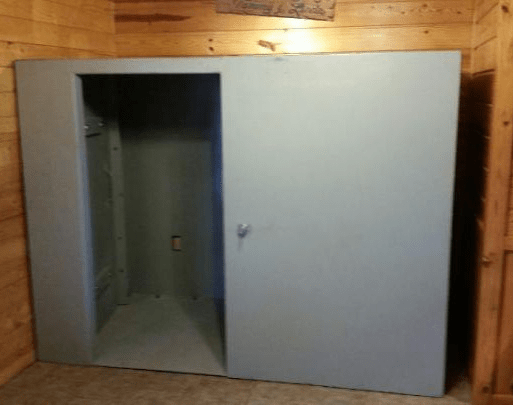
Above-Ground Safe Rooms: If mobility is an issue, we often recommend a steel safe room installed inside the garage. You can walk or roll a wheelchair straight in without any steps.
The Selection Process: Underground vs. Above Ground
In the world of garage shelters, you have two main paths. Both are EF5 rated. Both will save your life. The choice comes down to your physical preference and garage layout.
Underground Garage Shelters
These are the classic Oklahoma favorites. We cut a section out of your existing garage floor, excavate the earth, and drop in a heavy-duty steel unit.
-
Engineering: These units are designed so the lid slides open, and the weight of the earth keeps the unit anchored.
-
The Car Factor: You can park a vehicle over them. Most lids are designed with a low profile so they don’t interfere with your car’s undercarriage.
Above-Ground Steel Safe Rooms
If you aren’t a fan of being underground, a safe room is your fortress. These are bolted directly into your reinforced concrete slab using high-grade industrial anchors.
-
Ventilation: These units often feel less claustrophobic because they have multiple points of airflow and sit at eye level.
-
Panic Room Potential: Many customers use these as a secondary “panic room” to protect against home intruders, giving the unit year-round utility.
Measuring Your Space for the Perfect Fit
You don’t want to order a shelter only to find out it blocks your water heater or prevents you from closing the garage door.
Clearance and Obstructions
Walk out to your garage right now. Look at the floor.
-
Utility Lines: We need to ensure we aren’t digging into your main water line or gas pipes. Our team handles the utility “calls” before we dig, but it helps to know where your main shut-offs are.
-
The Swing of the Door: If you are installing an above-ground safe room, make sure the door can open fully without hitting your car or the garage walls.
-
Foundation Integrity: We look for cracks or settling in your garage floor. We want a solid, healthy slab to ensure the most secure installation possible.
Sizing Guidelines
A standard 6-person underground shelter usually measures around 3 feet wide by 7 feet long. However, you need “working room” around the site during installation. If your garage is packed with storage shelves and a workbench, you might need to clear some space before the crew arrives.
The Engineering Standards You Must Require
Not all shelters are built equal. In Oklahoma, you don’t buy a shelter based on price alone; you buy it based on the “cannon test.”
FEMA Compliance
Every shelter Oklahoma Shelters sells meets or exceeds FEMA 320 and 361 standards. This means the unit has been tested at the Wind Science and Engineering Research Center at Texas Tech University.
-
The Impact Test: Engineers fire a 15-lb wooden 2×4 at the shelter at 100 mph. If the wood pierces the steel, the shelter fails. Ours pass with flying colors.
-
The Pressure Test: The unit must stay anchored even when the wind tries to create a vacuum effect to lift it out of the ground.
Quality of Materials
We use high-grade steel. We use reinforced lids. We use a multi-point locking system. If a shelter only has one latch, walk away. Our garage shelters feature heavy-duty sliding lids that won’t get stuck if debris falls on top of them.
The Ordering and Installation Timeline
We know that when you decide to buy a shelter, you want it installed before the next “Level 4” risk day.
The Consultation
It starts with a simple conversation. You tell us about your garage and your family size. We provide a quote that covers everything—no hidden “digging fees” or “delivery surcharges.”
The 7-10 Day Window
While some companies have months-long backlogs, Oklahoma Shelters prides itself on efficiency. In most cases, we can have your shelter manufactured and installed within 7 to 10 days of your order.
-
Day of Installation: For an underground unit, the process takes about 4 to 6 hours. We saw the concrete, dig the hole, install the unit, and finish the edges with new concrete.
-
The Mess Factor: We use specialized equipment to keep the dust and dirt to a minimum. We want your garage to look better when we leave than it did when we arrived.
Life with Your New Shelter: Maintenance and Prep
Once the shelter is in, you aren’t done. A shelter is a tool, and you need to keep your tools in good working order.
Keeping it Dry and Clean
Underground shelters can collect dust or moisture over time.
-
Seal Checks: Occasionally check the seals around the lid to ensure they are free of debris.
-
Rust Prevention: Our units are coated to prevent corrosion, but it is always a good idea to keep the interior clean and dry.
-
Lighting: Ensure you have battery-powered LED lights mounted inside. Don’t rely on a handheld flashlight that might have dead batteries.
The “Go-Bag” Strategy
Don’t wait for the siren to gather your supplies. Keep a “Go-Bag” inside the shelter year-round.
-
Essentials: Bottled water, non-perishable snacks, and a first-aid kit.
-
Communication: A NOAA weather radio is non-negotiable.
-
Comfort: Keep a few old pairs of sneakers in the shelter. If your house is damaged, the ground will be covered in glass and nails. You do not want to walk out of your shelter in socks or flip-flops.
Common Myths About Garage Shelters
Let’s clear up some “old wives’ tales” that might be making you hesitate.
Myth 1: “If the house falls on the garage, I’ll be trapped.”
Modern garage shelters are designed with this in mind. The sliding lids are incredibly strong and can often be pushed open even with a significant amount of debris on top. Furthermore, we recommend registering your shelter with the city. If a storm hits, emergency responders have a GPS map of every registered shelter and will come to check on you.
Myth 2: “They always leak or flood.”
If a shelter is installed by amateurs, it might. But when we install a unit, we use proper sealing techniques and high-strength concrete to ensure a watertight fit. Unless you live in a literal flood zone, your garage shelter will stay dry.
Myth 3: “Safe rooms are safer than underground units.”
Both provide 100% survivability when engineered to FEMA standards. The “best” one is the one you can get into the fastest. For some, that’s under the floor. For others, it’s a walk-in room.
Why Oklahoma Shelters is the Right Choice
We are not a “fly-by-night” company that shows up after a big storm and disappears three weeks later. We live here. Our families use these same shelters.
-
Speed: We get your unit in place faster than almost anyone else in the state.
-
Transparency: Our pricing is straightforward.
-
Expertise: We know Oklahoma soil. We know how to dig in red clay and how to anchor in Oklahoma concrete.
Our goal is to make the ordering process as stress-free as possible. We handle the heavy lifting so you can focus on your family.
Final Thoughts: The Cost of Waiting
In Oklahoma, we don’t say “if” the storm comes; we say “when.” Every year, we see families who waited just one week too long to order their shelter. Don’t let that be your story.
The peace of mind you feel when that first siren goes off—knowing your kids are already safe in the garage—is worth every cent of the investment. It transforms a night of terror into a night of waiting.
We invite you to reach out. Ask the hard questions. Measure your garage. Let us help you build the fortress your family deserves.
Summary of Ordering Your Garage Shelter
-
Assess: Choose a size based on family, guests, and pets.
-
Type: Decide between an underground unit or an above-ground safe room.
-
Measure: Check for utility lines and ensure clearance for doors and vehicles.
-
Standard: Ensure the unit is EF5 rated and FEMA 320/361 compliant.
-
Order: Look for companies with short lead times (7-10 days).
-
Maintain: Keep your shelter stocked with a Go-Bag and fresh batteries.
Take Action Today
Your family’s safety is too important to leave to chance. Oklahoma Shelters is ready to provide the protection you need with the professional service you expect all over the State of Oklahoma Ada, Norman, Moore, Oklahoma City, Tulsa, and more.
Ready for a quote? Get your free estimate now and secure your home for the next storm season.
Email us: sales@oklahomashelters.net Call us: 405-367-7901