Concrete Storm Shelters: How Heavy Are They?
When you decide to protect your family from Oklahoma’s volatile weather, a concrete storm shelter is a top-tier choice. These structures provide immense peace of mind. However, their size and strength come with a physical reality: they are incredibly heavy.
Understanding the weight of a concrete shelter is not just a matter of curiosity. It dictates how the unit is transported, where it can be placed, and what the installation process looks like. At Oklahoma Shelters, we specialize in managing these heavy-duty logistics to ensure your safety remains uncompromised.
The Massive Weight of Concrete Protection
A standard outdoor concrete storm shelter is built to withstand the most violent EF5 tornadoes. To do this, it needs mass. Concrete is an ideal material because it is dense, durable, and naturally resistant to the flying debris common in high-wind events.
Typical Weight Ranges
The weight of a concrete shelter varies based on its dimensions and the thickness of its walls.
-
Small Shelters (6×4 feet): These typically weigh between 10,000 and 12,000 pounds.
-
Medium Shelters (6×8 feet): These often fall in the range of 15,000 to 18,000 pounds.
-
Large Shelters (7×10 feet or larger): These can easily exceed 20,000 to 25,000 pounds.
To put this in perspective, a medium-sized shelter weighs about as much as three full-sized pickup trucks. This weight is what keeps the shelter anchored firmly in the ground when atmospheric pressure drops and winds reach 200 mph.
Why Weight Matters for Tornado Safety
You might wonder if a lighter material would be easier to handle. While steel and fiberglass shelters are excellent options, the weight of concrete offers specific advantages.
-
Natural Ballast: The sheer mass of the concrete acts as its own anchor. While we still use professional anchoring techniques, the weight makes it nearly impossible for wind forces to shift the unit.
-
Debris Resistance: Thick concrete walls do not dent or deform when struck by 2x4s or larger debris traveling at high speeds.
-
Longevity: A heavy concrete structure is a permanent addition to your property. It does not rust and, when properly sealed, lasts for decades.
Installation Logistics: Moving 15,000 Pounds
Because these units are so heavy, you cannot simply drop them into a hole with a standard pickup truck. The installation of a concrete shelter at Oklahoma Shelters involves specialized equipment and precision planning.
The Delivery Truck
We use heavy-duty boom trucks or specialized trailers equipped with hydraulic cranes. These vehicles are designed to carry the massive load of the concrete shell without damaging their own frames or axles.
Site Accessibility
Before the truck arrives, we must assess your property. A 20,000-pound truck carrying a 15,000-pound shelter requires firm ground. If the ground is too soft or muddy, the truck could sink.
-
Clearance: We need enough overhead clearance to avoid power lines and tree branches.
-
Width: The truck needs a wide enough path to reach the backyard or the designated installation site.
The Crane Operation
Once the truck is in position, the crane lifts the shelter. This is a delicate process. The weight must be balanced perfectly to ensure the shelter stays level as it is lowered into the excavated pit.
Preparing the Ground for the Weight
A concrete shelter cannot sit on loose soil. If the ground isn’t prepared, the weight of the shelter could cause it to sink unevenly or tilt over time.
Excavation
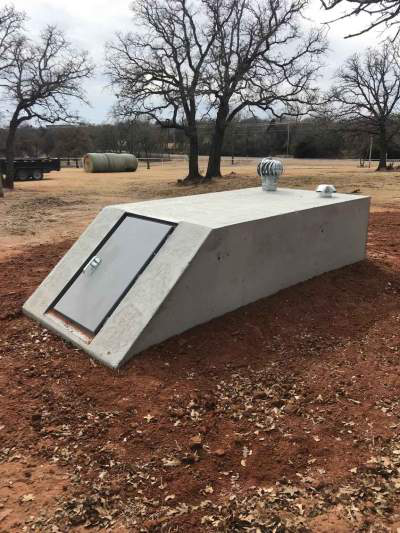
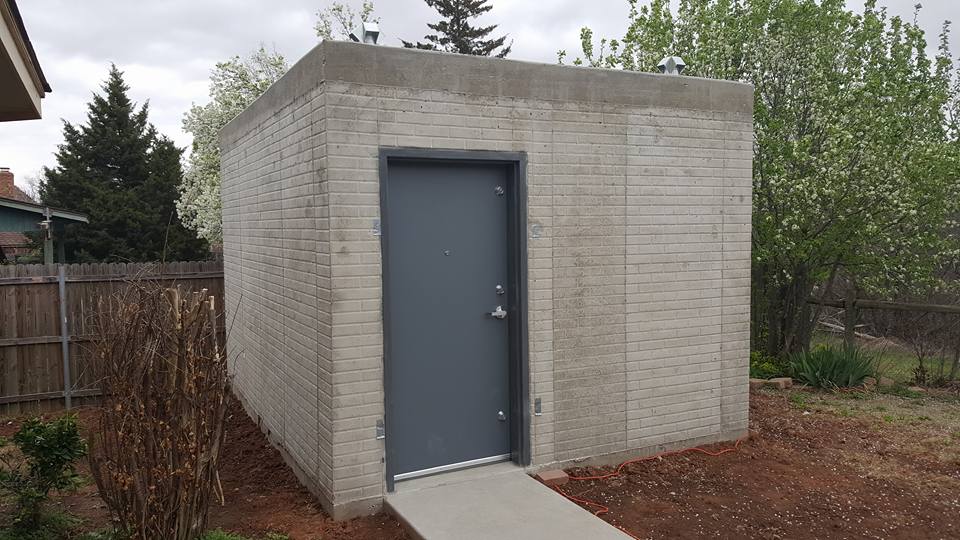
We dig a hole specifically tailored to the dimensions of your chosen model. The depth is crucial. For slope-front shelters, a portion remains above ground, while flat-top models are often buried deeper.
The Base Layer
To handle the weight, the bottom of the pit must be level and compacted. In some areas of Oklahoma, we may use a layer of gravel to assist with drainage and stability. This ensures the 18,000-pound structure sits on a firm foundation that won’t shift during heavy rains.
Backfilling
Once the shelter is set, we backfill the area with the removed soil. We pack the dirt tightly around the sides. This soil adds even more “weight” and friction, further securing the shelter against the forces of a storm.
Comparing Concrete to Other Materials
If the weight of concrete seems daunting, you might look at other types of shelters. Oklahoma Shelters offers a variety of options to fit different property types. You can view our full range of products on our Types of Storm Shelters page.
Steel Safe Rooms
Steel units are much lighter than concrete. They are usually bolted to an existing concrete slab in a garage or closet. While they are lighter, they are engineered to provide the same level of protection.
Underground Steel Shelters
These are often installed in garage floors. They are lighter than concrete units but require different installation techniques, such as being encased in concrete to prevent “buoyancy” (where the unit pops out of the ground during a flood).
Why Choose Concrete Despite the Weight?
Many homeowners prefer concrete because it feels more substantial. There is a psychological comfort in being surrounded by several inches of reinforced stone. Additionally, concrete is often the most cost-effective option for large outdoor installations.
Impact on Your Property and Landscaping
Installing a 15,000-pound structure will temporarily change the look of your yard.
-
Tire Tracks: The delivery truck will likely leave tracks in your grass. We recommend timing your installation during drier months to minimize this.
-
Soil Displacement: We will have a large pile of dirt after the excavation. We use this for backfilling, but there is often “spoils” (extra dirt) left over. You can use this for landscaping or have it hauled away.
-
Permanent Footprint: Once the shelter is in, it isn’t moving. Think carefully about future plans like pools, decks, or fences.
Safety Standards and Engineering
Every concrete shelter provided by Oklahoma Shelters meets or exceeds FEMA 320 and 361 standards. This means the weight and the reinforcement are calculated by engineers to survive an EF5 tornado.
We use rebar reinforcement inside the concrete. This creates a “cage” that holds the concrete together even if it were to crack under extreme pressure. This engineering is why a concrete shelter is one of the safest places on earth during a storm.
For more information on the history and reliability of our company, please visit our About Us page.
Frequently Asked Questions About Concrete Shelters
Will the shelter sink over time?
When installed by professionals like the team at Oklahoma Shelters, sinking is extremely rare. We compact the base and ensure the soil density can support the weight.
Can I move the shelter if I sell my house?
Technically, yes, but it is very expensive. Because of the weight and the need for a crane and specialized truck, most people leave the shelter as a permanent value-add to the home.
How thick are the walls?
Standard concrete storm shelters usually have walls and ceilings that are 3 to 4 inches thick. This thickness, combined with high-strength concrete, provides the necessary mass for safety.
The Installation Timeline
Despite the massive weight, the installation process is surprisingly fast.
-
Consultation: We help you choose the right size and location.
-
Excavation: Usually takes 1–2 hours.
-
Delivery and Setting: The crane work typically takes less than an hour.
-
Final Sealing: We seal the joints to prevent water intrusion.
-
Backfilling: Another 1–2 hours.
In most cases, you can have a fully functional storm shelter in a single morning or afternoon.
Maintenance for Your Heavy Shelter
Because concrete is so durable, maintenance is minimal. However, you should check a few things:
-
The Door: The door is usually steel. Ensure the hinges stay greased so the heavy door swings easily.
-
Seals: Check the vents and the door seal to ensure no debris or pests are getting in.
-
Cracks: Hairline cracks are normal in concrete, but if you see large gaps, call a professional for an inspection.
Environmental Benefits of Concrete
Concrete is an environmentally friendly choice for storm protection. It is made from natural materials. It has high “thermal mass,” meaning it stays relatively cool in the summer and holds some warmth in the winter. This makes the environment inside the shelter more comfortable during a long wait for a storm to pass.
Why Professional Installation is Mandatory
You should never attempt to install a concrete storm shelter yourself. The risks associated with moving 15,000 pounds are too high.
-
Safety: Dropping a unit can cause it to crack, ruining its structural integrity.
-
Liability: If a DIY installation fails during a storm, the consequences are life-threatening.
-
Precision: If the unit isn’t perfectly level, the heavy steel door might not latch correctly, which is a major safety hazard.
At Oklahoma Shelters, we have the experience and the insurance to handle these massive structures safely. We service all of Oklahoma, ensuring that whether you are in Oklahoma City, Tulsa, or a rural county, you have access to the best protection.
External Resources for Storm Safety
To stay prepared, we recommend following these high-authority sources:
-
National Weather Service (NWS): The best place for real-time weather alerts and safety tips.
-
American Red Cross: Provides excellent guides on creating an emergency kit for your new shelter.
Final Considerations
A concrete storm shelter is a significant investment in your family’s future. Its weight is its greatest strength, providing a literal anchor in the midst of chaos. By understanding the logistics of installation, you can better prepare your property for the arrival of your new life-saving structure.
Oklahoma Shelters is here to handle the heavy lifting for you. We take pride in our precision and our commitment to the safety of our fellow Oklahomans.
Article Recap
-
Massive Weight: Concrete shelters range from 10,000 to over 25,000 pounds depending on size.
-
Safety Advantage: The weight acts as a natural anchor and provides superior resistance to flying debris.
-
Logistics: Installation requires heavy-duty boom trucks and cranes to move the units.
-
Preparation: The ground must be properly excavated and compacted to support the structure’s weight.
-
Fast Installation: Despite the weight, professional installation usually takes only a few hours.
-
Standards: All units meet FEMA engineering requirements for EF5 tornado protection.
Ready to secure your home with a high-strength concrete shelter? Let the experts at Oklahoma Shelters handle the installation for you. We provide professional service across the entire state of Oklahoma. email us at sales@oklahomashelters.net for a free, no-obligation quote. You can also reach us directly at 405-367-7901. Don’t wait until the sirens go off—get protected today!