Above vs. Below Ground: Finding Your Best Storm Shelter
If you have spent even one spring in Oklahoma, you know that particular shade of green the sky turns right before things get serious. You’ve heard the sirens wail and felt that frantic internal question: “Is my family actually safe where we are?” For many of us, the bathtub or a hallway closet just doesn’t cut it anymore.
Deciding to install a storm shelter is the easy part. The real challenge comes when you have to choose between going underground or staying above the surface. Both options have saved countless lives in Oklahoma City and across the state. However, the right choice for your neighbor might be the wrong choice for you.
At Oklahoma Shelters, we’ve helped thousands of families navigate this exact dilemma. Whether you are in a suburban cul-de-sac or out on a sprawling acreage, understanding the nuances of “above versus below” is the first step toward true peace of mind.

The Traditionalist’s Choice: Underground Shelters
There is something instinctively comforting about putting several feet of Oklahoma red clay between yourself and a tornado. For generations, the “storm cellar” was the gold standard. Modern engineering has taken that old backyard pit and turned it into a sophisticated safety system.
Underground Garage Shelters
If you live in a modern neighborhood, you likely don’t have room for a massive cellar in the yard. This is where the underground garage shelter shines. We cut into your existing garage slab and install a reinforced steel unit that sits flush with the floor.
-
Space Efficiency: You can still park your car in the garage.
-
Seamless Access: You don’t have to run through rain, hail, or lightning to get to safety.
-
Maximum Earth Insulation: You are below the wind line, protected by the density of the earth and your home’s foundation.
Outdoor Concrete Cellars
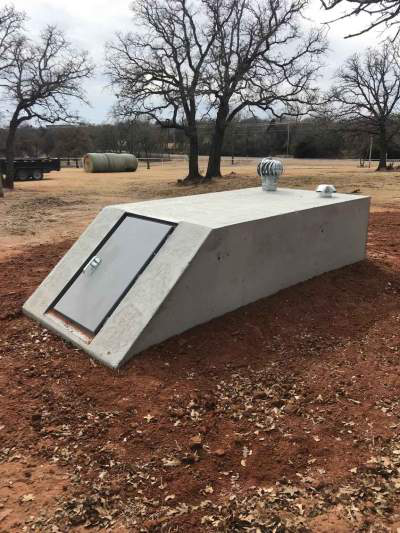
For those with more yard space, the classic outdoor concrete shelter remains a staple. These are the workhorses of tornado protection. They offer massive interior volume, making them perfect for large families or those with several pets. You can view the different types of storm shelters we offer to see the varying sizes of these units.
The Modern Revolution: Above-Ground Safe Rooms
I remember a time when people scoffed at the idea of staying above ground during an EF5. That changed after the 1999 and 2013 Moore tornadoes. Engineers found that properly anchored steel safe rooms remained standing even when the rest of the house was swept away.
Why Choose a Safe Room?
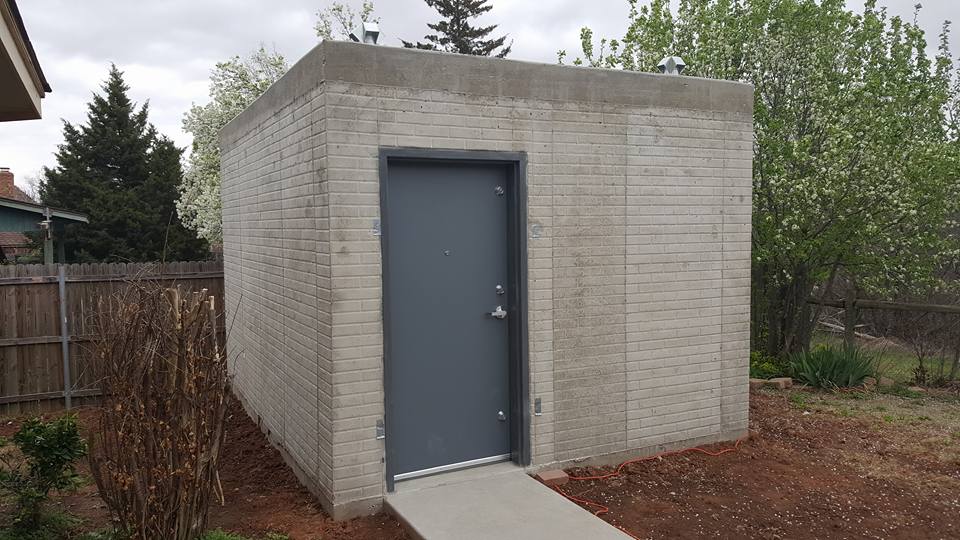
A safe room is a heavy-duty steel box bolted to a reinforced concrete slab. It doesn’t rely on depth; it relies on physics and structural integrity.
-
Accessibility: This is the primary reason many choose above-ground units. If you have elderly family members, young children, or someone with mobility issues, navigating steep, wet stairs in the dark is dangerous.
-
Claustrophobia: Some people simply cannot handle being underground. A safe room feels more like a standard room, which can help keep heart rates down during a stressful event.
-
No Risk of “Floating”: In areas with a high water table, underground units can sometimes be pushed out of the ground by hydrostatic pressure. Safe rooms eliminate this concern entirely.
Testing the Limits
Every safe room we install at Oklahoma Shelters has been rigorously tested. We follow the lead of Texas Tech University’s Wind Science and Engineering Research Center. Our units are subjected to debris impact tests where 15-pound 2x4s are fired at 100 mph. They don’t just hold up; they protect.
Factoring in Your Property’s Geology
Why does your location in Oklahoma matter? The soil in Oklahoma City is quite different from the soil in Tulsa or the rocky terrain of the Arbuckles.
-
The High Water Table: If your property is near a creek or in a low-lying area, an underground shelter might face leaking or buoyancy issues over time.
-
The “Hard Rock” Factor: In some parts of the state, digging a hole for a shelter requires heavy machinery to break through solid rock, which can increase installation costs.
-
Expansive Clay: Our famous red clay expands and contracts. This puts pressure on underground walls. Our steel and reinforced concrete units are designed specifically to handle this “Oklahoma squeeze.”
Comparing the Cost and Value
Budget is always a factor, but in Oklahoma, a storm shelter is more of an investment than an expense.
-
Installation Speed: Above-ground safe rooms can often be installed in a matter of hours with very little mess. Underground units require excavation and a bit more construction time.
-
Home Resale: In Oklahoma, a home with a storm shelter is infinitely more attractive to buyers. Many real estate experts suggest you can recoup a significant portion of the cost when you sell.
-
Rebate Programs: Many municipalities offer safe room rebates. We always recommend checking with the Oklahoma Department of Emergency Management to see if you qualify for financial assistance.
The Psychology of Safety: Which Makes You Feel Safer?
At the end of the day, the best shelter is the one you will actually use. If the thought of a safe room makes you nervous, you won’t use it. If the thought of stairs makes you hesitate, an underground cellar is a liability.
Consider a typical Oklahoma spring night. The power is out. The hail is the size of golf balls. You have thirty seconds to get the kids and the dog into position. Which unit allows you to move with confidence? For many, the indoor garage shelter is the perfect middle ground—underground protection with indoor convenience.
Debunking Common Myths
There is a lot of “old-timer” advice floating around Oklahoma that isn’t always accurate. Let’s clear a few things up:
-
Myth: “Underground is the only way to survive an EF5.”
-
Fact: FEMA-certified safe rooms are rated to withstand EF5 winds. History has proven they stay anchored while the house fails around them.
-
Myth: “Underground shelters will always fill with water.”
-
Fact: Modern units are sealed and treated. While no underground structure is 100% immune to all conditions, professional installation prevents almost all moisture issues.
-
Myth: “You can’t hear the sirens from a safe room.”
-
Fact: Safe rooms are thick, but you can still hear sirens. However, you should always have a battery-powered NOAA weather radio inside regardless of which shelter you choose.
Maintenance: Protecting Your Investment
A storm shelter is a life-saving tool. You wouldn’t ignore the brakes on your car; don’t ignore your shelter.
-
Keep it Dry: Check your underground unit for moisture after heavy rains.
-
Check the Seals: Ensure the door gaskets on your safe room are intact to prevent debris and insects from entering.
-
Keep the Path Clear: Never stack heavy boxes or park a car in a way that blocks the entrance to your shelter. Seconds count.
-
Practice the Door: Make sure every family member knows how to operate the latches. Some doors are heavy, and kids should know the “trick” to opening them.
Why Oklahoma Shelters is the Local Authority
We are based in Oklahoma City and service the entire state. We aren’t a national corporation that doesn’t understand our weather. We are Oklahomans who have seen the damage of 1999, 2003, and 2013 firsthand.
Our commitment to quality isn’t just a marketing slogan—it’s a neighborly promise. We use only the highest grade materials and our installers are trained to handle the specific soil conditions of the Sooner State. You can learn more about our team and our history on our about us section on our main page.
Article Recap: Above vs. Below Ground Storm Shelters
-
Underground Pros: Maximum protection from wind, space-saving garage options, and traditional peace of mind.
-
Underground Cons: Requires stairs, susceptible to high water tables, and higher excavation effort.
-
Safe Room Pros: Perfect for those with mobility issues, quick installation, and no risk of flooding.
-
Safe Room Cons: Takes up floor space in a garage or closet and can be intimidating to those used to cellars.
-
Testing: All units must meet FEMA 320/361 standards to be considered safe for an EF5.
-
Property Value: A certified shelter increases home desirability and resale value in Oklahoma.
-
Expertise: Oklahoma Shelters offers statewide service with a focus on certified, debris-impact-tested units.
Don’t Leave Your Safety to Chance
The 2026 storm season is just around the corner. Whether you prefer the deep security of an underground unit or the easy access of a safe room, the time to decide is now. Protect your family with the most trusted name in Oklahoma storm protection.
Contact Oklahoma Shelters Today for a Free Estimate! Explore our full range of Types of Storm Shelters and find the perfect fit for your property. Your safety is our mission.