Living in Oklahoma means living with the reality of severe weather. Our state sits in the heart of Tornado Alley. We see an average of over 50 tornadoes every year. When the sirens wail, you need a plan that works for your family.
Choosing a storm shelter is one of the most important decisions a homeowner can make. The biggest debate usually centers on one question: Should you go above ground or below ground? Both options offer “near-absolute” protection when built to FEMA standards. However, they cater to very different needs, budgets, and property types.
Oklahoma Shelters has spent years installing both types across the state. We want to help you weigh the pros and cons so you can choose with confidence.
Understanding the Basics of Storm Protection
Before looking at the differences, it is helpful to know what makes a shelter safe. A true storm shelter isn’t just a sturdy room. It is a life-saving structure engineered to withstand 250 mph winds. This is the wind speed associated with an EF5 tornado.
All the shelters we provide meet or exceed FEMA P-361 guidelines. Whether you are standing on your garage floor or sitting six feet underground, the engineering ensures that debris won’t penetrate the walls.
The Case for Below Ground Storm Shelters
For many Oklahomans, “taking cover” instinctively means going down. Below ground shelters use the earth as a natural shield. This is the traditional approach to storm safety in the Great Plains.
In-Ground Garage Shelters
These are incredibly popular in Oklahoma City and surrounding suburbs. We install these by cutting into your existing concrete garage floor. The shelter sits flush with the ground.
-
Space Saving: You don’t lose any square footage in your garage. You can even park your car directly over the shelter.
-
Discreet: They are hidden away until you need them.
-
Ultimate Debris Protection: Because the unit is underground, flying debris cannot strike the sides of the shelter.Only the lid is exposed.
Outdoor Concrete Cellars
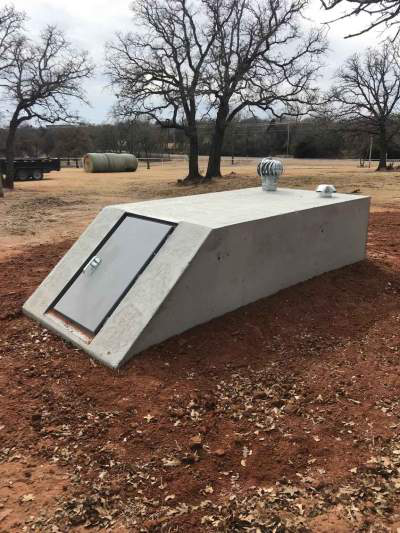
These are the classic “storm cellars” often seen in rural Oklahoma. They are typically installed in the front or back yard.
-
Large Capacity: Concrete shelters are often roomier, making them great for large families or neighborhood groups.
-
Accessibility: We bring these in on large trucks and set them into a pre-excavated hole.
-
Durability: Reinforced concrete is exceptionally strong and lasts for decades.
The Cons of Below Ground Options
While they offer great protection, there are drawbacks. navagating stairs can be difficult for the elderly or those with mobility issues. In Oklahoma, our high clay content in the soil can also lead to shifting or moisture issues if not handled by professionals. There is also the rare risk of being “trapped” if debris falls on top of the door, though modern sliding lids are designed to minimize this.
The Case for Above Ground Safe Rooms
Above ground safe rooms have gained massive popularity over the last decade. Many people used to believe you had to be underground to be safe. Testing by Texas Tech University’s National Wind Institute has proven this a myth. A properly anchored steel safe room is just as safe as a cellar.
Steel Safe Rooms
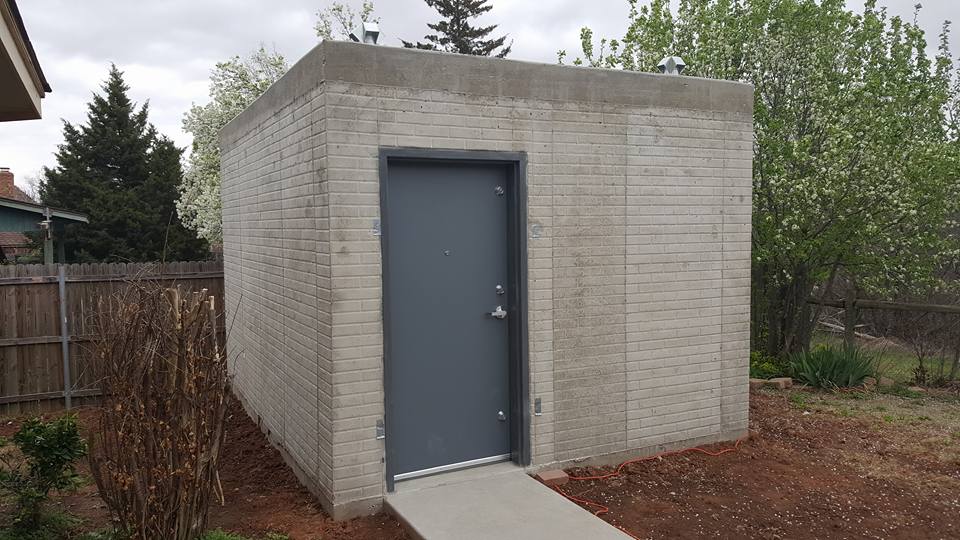
These units are typically made of 1/4-inch thick steel. They are bolted directly to a reinforced concrete slab, usually inside a garage or a dedicated room in the house.
-
Maximum Accessibility: There are no stairs. You simply walk in. This is the best choice for wheelchairs, walkers, or people with knee and hip issues.
-
Quick Access: Since they are usually inside the home or garage, you don’t have to run through rain or hail to get outside to a cellar.
-
No Flooding: Because they are above ground, you never have to worry about groundwater seepage or spiders and snakes that sometimes find their way into outdoor cellars.
The Cons of Above Ground Options
The main “con” is that they take up physical space. If you put a 4×6 safe room in your garage, that is space you can no longer use for storage or a vehicle. They are also visible, which some homeowners find less aesthetically pleasing than an underground unit.
Side-by-Side Comparison: Which Fits Your Life?
1. Accessibility and Mobility
If you have small children, elderly parents, or pets, think about the “scramble.” Getting a panicked dog or a toddler down a vertical ladder in the dark is hard. Above ground safe rooms allow you to walk right in. Below ground shelters require a bit more physical coordination.
2. Installation and Soil Conditions
Oklahoma is famous for its “red clay” soil. This soil expands when wet and shrinks when dry. This constant movement can put pressure on underground tanks. While we use reinforced designs to combat this, above ground units avoid the “soil battle” entirely. Above ground units are also much faster to install since no major excavation is required.
3. Psychological Comfort
Some people feel safer with six feet of dirt over their heads. Others feel claustrophobic underground and worry about being trapped by debris. This is a personal preference. Both will keep you alive, so choose the one that makes your family feel the most at ease.
4. Property and Resale Value
Both types of shelters add value to an Oklahoma home. However, an in-ground garage shelter is often preferred by buyers who want to keep their garage floor space open. Conversely, an above ground safe room can sometimes be moved to a new home if you decide to relocate, whereas an underground unit is a permanent fixture.
Maintenance Requirements
A storm shelter is an investment that requires minimal but regular care.
-
Below Ground: You should check for water accumulation after heavy rains. It is also wise to sweep out dirt and check the seal on the door.
-
Above Ground: Maintenance is mostly about the moving parts. You should grease the hinges and the door latches once or twice a year to ensure they don’t seize up.
Why Choose Oklahoma Shelters?
We aren’t just installers; we are neighbors. We understand the specific weather patterns of the National Weather Service – Norman area. We know that when a dry line forms in Western Oklahoma, the clock starts ticking for OKC.
Our team provides a seamless process:
-
Consultation: We help you measure your garage or yard to see which unit fits.
-
Permitting: We help you navigate local Oklahoma City or suburban permit requirements.
-
Installation: Our crews are trained to install with precision, ensuring anchors are set to exact specifications.
-
Peace of Mind: We provide units that are tested and approved, so you never have to wonder if you are truly safe.
Custom Solutions and Bunkers
Sometimes a standard size doesn’t work. We also offer custom shelters and bunkers for those who need larger spaces or specific configurations. Whether you need a community-sized shelter for a small business or a specialized safe room for a new construction home, we have the engineering expertise to build it.
Article Recap
-
Safety Standards: Both types meet FEMA P-361 and ICC-500 standards for EF5 protection.
-
Underground Pros: Space-saving (garage units) and natural earth shielding.
-
Underground Cons: Stairs can be difficult for some; potential for moisture or pests.
-
Above Ground Pros: No stairs (ADA accessible), indoor access, and no flooding risks.
-
Above Ground Cons: Takes up floor space in the garage or home.
-
Installation: Above ground is typically faster; below ground requires excavation.
-
Value: Both increase home resale value in Oklahoma.
Protect Your Family Before the Next Storm
The best time to install a storm shelter was yesterday. The second best time is today. Don’t wait until the sirens are sounding to realize you have nowhere to go. Whether you prefer the walk-in ease of a safe room or the classic protection of a below ground shelter, Oklahoma Shelters is ready to serve you.
We service the entire state of Oklahoma from our home base in Oklahoma City. We offer financing options to make safety affordable for every family.
Call Oklahoma Shelters today at 405-367-7901 or email us at sales@oklahomashelters.net to get your free quote.
External Resources:
-
National Storm Shelter Association (NSSA): Link to nssa.biz for industry standards and consumer safety information.
-
Oklahoma Department of Emergency Management: Link to oklahoma.gov/oem for local storm prep resources and disaster statistics.